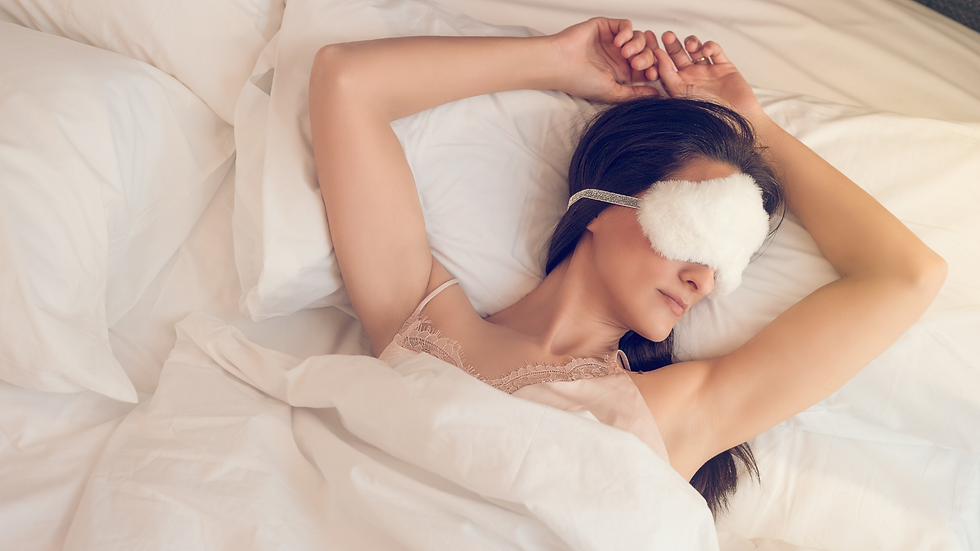
Do (Weighted) Eye Masks Really Improve Sleep and Relaxation?
Eye masks can make sleep time darker, which supports the brain’s natural sleep timing and can improve next-day alertness. Weighted or “massage” masks add pressure or warmth, but evidence for better sleep than a normal blackout mask is limited.

Gadgifyr
January 23, 2026
7 min
Real - World Performance
⚙️ A basic blackout eye mask can reduce night light exposure, supporting deeper sleep biology and improving next-day alertness in healthy adults.
⚙️ In noisy/bright environments (travel, hospitals), pairing eye mask + earplugs can improve perceived sleep quality.
⚙️ Weighted masks may help some people relax via comfort pressure, but this is not yet clearly proven to improve sleep more than blackout alone.
⚙️ Warm eye masks may support relaxation and sleepiness by nudging body heat-loss patterns that normally happen before sleep.
⚙️ The most reliable “upgrade” is not weight—it’s fit: a mask that seals light without pressing on the eyelids.
⚙️ For side sleepers, strap-free or low-profile designs can reduce wake-ups from discomfort (comfort is a real sleep driver).
⚙️ Consistency matters: using the mask nightly helps your brain associate it with “lights out,” improving bedtime routine strength.
Good to Know
🔍 The best-studied benefit of eye masks is reducing light exposure, not “pressure therapy.”
🔍 Eye masks improved learning and alertness in healthy young adults, even without claiming major changes in sleep length.
🔍 In clinical settings, eye masks can influence sleep-quality scores and are linked with melatonin/cortisol differences versus control.
🔍 “Weighted mask = faster sleep for everyone” is overhyped; current evidence doesn’t clearly show superiority over a normal blackout mask.
🔍 Deep pressure can reduce stress-activation signals in the body, but that evidence comes from pressure vests, not weighted eye masks.
🔍 Heat around the eyes has research suggesting it may help sleep onset via normal thermoregulation patterns.
🔍 If a mask presses on the eyeballs, causes headache, or irritates skin, it can worsen sleep—comfort beats features.
🔍 Any “massage” feature that feels stimulating (strong vibration) can backfire close to bedtime for some users.
Sleep is strongly guided by light. When light reaches the eyes at night—even low levels—it can interfere with the body’s normal “night mode,” including melatonin timing and sleep structure. A simple eye mask targets this problem directly by blocking ambient light, which is why standard (non-weighted) masks have real scientific support.µ
In healthy young adults, wearing an eye mask during overnight sleep for a week improved episodic learning (memory for new information) and next-day alertness compared with a control condition where light was not blocked. The same research found the memory benefit was linked to time spent in slow-wave sleep, the deep sleep stage often tied to recovery and learning.
In hospital settings where light and noise are major sleep disruptors, a randomized trial in coronary care patients found that eye masks (and earplugs) improved different parts of sleep quality scores, and eye-mask use was associated with differences in night-time melatonin and cortisol compared with control.
Weighted sleep masks try to go beyond darkness by adding gentle pressure around the eyes and face (similar in idea to “deep pressure” tools). Deep pressure stimulation can change the body’s arousal system: a study using a pressure vest in adults showed reduced sympathetic arousal (stress-response activity) and increased parasympathetic activity (rest-and-digest), alongside improved performance after pressure was applied. But that is not the same as proving a weighted eye mask improves sleep, because the pressure location, dose, and bedtime use are different.
So what’s the firm takeaway? If the goal is better sleep, the best-supported advantage is light blocking, not weight. There is good evidence that a normal eye mask can support sleep-related outcomes, especially when bedroom light cannot be fully controlled.
Evidence that weighted masks are better than a well-fitting blackout mask for falling asleep faster or improving sleep patterns is currently thin, and should be treated as an “individual preference” feature rather than a proven upgrade.
For “eye massage” masks (pressure + vibration + heat), the most plausible sleep-relevant feature with research support is gentle warmth around the eyes. Periocular warming has been reported to promote physiological heat-loss patterns linked to sleepiness and may accelerate sleep in controlled research settings.

KEY STATISTICS
RELATED READING




EVIDENCE-BASED RELIABILITY
69%
Overall Score
Sources Used
Claim Types
Long-term Studies
Strong support for light-blocking masks, limited direct proof that weighted masks outperform standard blackout masks.
AT A GLANCE - METRIC ACCURACY
The Consumer Takeaway
Weighted eye masks sound like a mini weighted blanket for the face, but the most proven sleep advantage still comes from something simpler: darkness. Studies in healthy young adults show that blocking light at night with an eye mask can improve next-day alertness and learning, with the memory effect linked to slow-wave (deep) sleep. In medical settings where bright light and noise are common, eye masks can also improve parts of perceived sleep quality and are associated with changes in night-time hormone measures like melatonin and cortisol.
The “weighted” part is where marketing often runs ahead of evidence. Deep pressure can shift the body toward a calmer autonomic state in lab-style research, but that does not yet equal clear proof that a weighted eye mask improves sleep more than a comfortable blackout mask. If extra features are desired, gentle warmth has more direct physiological logic and some supportive research. The most science-aligned recommendation is simple: buy for fit and blackout first, then treat weight or massage as optional comfort—useful for some, not a guaranteed sleep upgrade.
Greco, V., Bergamo, D., Cuoccio, P., Konkoly, K. R., Lombardo, K. M., & Lewis, P. A. (2023). Wearing an eye mask during overnight sleep improves episodic learning and alertness. Sleep, 46(3), zsac305. https://doi.org/10.1093/sleep/zsac305
Khoddam, H., Maddah, S. A., Rezvani Khorshidi, S., Kamkar, M. Z., & Modanloo, M. (2022). The effects of earplugs and eye masks on sleep quality of patients admitted to coronary care units: A randomized clinical trial. Journal of Sleep Research, 31(2), e13473. https://doi.org/10.1111/jsr.13473
Cyr, M., Artenie, D. Z., Al Bikaii, A., Borsook, D., & Olson, J. A. (2022). The effect of evening light on circadian-related outcomes: A systematic review. Sleep Medicine Reviews, 64, 101660. https://doi.org/10.1016/j.smrv.2022.101660
Reynolds, S., Lane, S. J., & Mullen, B. (2015). Effects of deep pressure stimulation on physiological arousal. American Journal of Occupational Therapy, 69(3). https://doi.org/10.5014/ajot.2015.015560
Ichiba, T., et al. (2020). Periocular skin warming promotes body heat loss and sleep. Scientific Reports. https://doi.org/10.1038/s41598-020-77192-x
DID YOU GET ANY OF THAT?
Read a summarization of this page's content in question-answer format ▽ (click to open and collapse the content)
Do weighted eye masks help you fall asleep faster than normal masks?
There is solid evidence that blocking light can improve sleep-related outcomes, but clear proof that weight adds extra sleep benefit over a good blackout mask is limited. For many users, comfort and light seal will matter more than added pressure.
What is the main science-based benefit of any sleep mask?
It reduces light hitting the eyes at night, which supports the body’s normal night-time biology and can improve next-day alertness and learning. This effect has been shown in healthy young adults using standard eye masks.
Do “eye massage” masks have proven sleep benefits?
Evidence is stronger for gentle warmth around the eyes than for vibration or pressure patterns. Heat may promote sleepiness through normal body-temperature regulation, while stronger stimulation could keep some people alert.
Is there any situation where masks help more?
They tend to help most when the environment is hard to control—streetlights, early sunrise, travel, or hospital rooms. In a coronary care unit study, eye masks (and earplugs) improved measures of sleep quality compared with control conditions.
What are the best practical tips for choosing and using one?
Prioritize a true blackout seal, soft skin contact, and no pressure on the eyeballs, then test it for a week to judge comfort and routine effects. If you want an “extra,” consider gentle warmth first and treat weight as optional comfort rather than a guaranteed sleep upgrade.
Gadgets Connected to These Scientific Insights
The gadgets shown here each rely on the science discussed in this article — sometimes directly, sometimes through a clever variation of the same underlying technology.
For the best experience, we recommend reading the summary first. It gives you a quick, clear understanding of how the technology works and helps you decide whether these gadgets match what you’re looking for.

This review covers an Amazon product offered through affiliate links. Gadgifyr may earn a small commission if you buy — at no extra cost to you.

Seller:
Amazon
Therabody SmartGoggles Heated Eye Mask & Massager
Blackout smart eye mask combining heat and massage to support personalized wind-down routines for sleep, stress management, and screen-related eye tension
Explore other Gadget Related Articles:

From Pore Vacuums to Blue Light: What Actually Treats Acne, and What Doesn’t
A science-driven breakdown of how acne develops, whether suction gadgets and blue light therapy can treat or prevent it, and the most effective alternatives for maintaining healthy, clear skin.

From Heat to Electricity: What Really Works for Period Cramp Pain?
Heat, gentle electrical stimulation, and some self-care habits can reduce period cramps for many people, but the best results usually come from combining proven methods rather than relying on one gadget.

Earwax Removal: Helpful Hygiene or Unnecessary Risk?
Earwax protects the ear, but trapped wax can block hearing and should only be removed using proven, low-risk methods.

1 / 15


About Gadgifyr
We uncover and review gadgets that genuinely make life better — from boosting focus and energy to improving everyday comfort and wellbeing.
No exaggerations, no empty promises. Just real reviews, grounded research, and practical tech that adds value — not noise.
When a gadget makes bold claims, we test the facts, check the science, and give you the clarity you need to decide with confidence.
Join the Gadgifyr Community
Stay ahead of the curve, together.
Get involved with a community that loves smart gadgets, real reviews, and tech that actually improves life.
Subscribe to the Newsletter
No spam. Just smart tech.
Get new reviews, science insights, and hand-picked gadget drops straight to your inbox.
Explore Gadgifyr's Blogs

Gadgifyr
April 18, 2026
-
7 min
Clean Mouth, Clear Science: What Actually Improves Oral Hygiene
A science-guided oral care routine is built on consistent plaque control, smart fluoride use, and lifestyle choices that reduce acid exposure - while avoiding overbrushing, unnecessary abrasion, and “whitening” shortcuts that can undermine enamel protection.
Category

Gadgifyr
May 18, 2026
-
6 min
Intermittent Fasting: What It Does, What It Doesn’t, and How to Use It Safely
A practical, evidence-grounded guide to what intermittent fasting is, how it affects metabolism and appetite, where the research is strongest, what is still uncertain, and how to implement it.
Category

Gadgifyr
May 28, 2026
-
7 min
Cook Faster With Less Mess: 5 Genius Kitchen Tools That Upgrade Workflow
Want cooking to feel smoother day-to-day? These five tools improve prep speed, reduce mess, and keep ingredients moving—without turning the kitchen into a gadget collection.
Category

Gadgifyr
May 3, 2026
-
7 min
Wearable Health Tracking Demystified: What Your Smartgear Gets Right - and What It Doesn’t
An accessible exploration of how consumer wearables sense the body, which measurements hold practical value, where accuracy weakens, and how upcoming technologies could expand their medical relevance.
Category


