
Sleep Position Fixes for Neck and Back Pain
Sleeping posture can either keep the spine in a neutral line or quietly twist it for hours. Research suggests pillow design and height can reduce neck pain and morning symptoms, while certain sleep positions are more consistently linked with low back pain.
What the Science Says
Sleep is supposed to be “recovery time,” but posture can turn it into eight hours of low-level mechanical stress. The spine is a stack of joints, discs, and muscles that prefer a neutral alignment—not perfectly straight, but balanced, without sharp bending or rotation. When a person sleeps with the head tilted up or down, or the low back arched and twisted, muscles may stay slightly active to protect the joints. That can show up as morning stiffness, neck pain, headaches, or low back discomfort that improves after moving around.
Pillows matter because the neck is a smaller structure that is easy to misalign. A systematic review and meta-analysis of pillow trials found that certain designs—especially rubber and spring pillows—were associated with reduced neck pain, less waking pain, and lower neck disability in people with chronic neck pain. Interestingly, that same review reported no clear improvement in sleep quality from pillow changes, suggesting that pillow upgrades can reduce pain without automatically making sleep feel deeper or longer. The review also noted that spinal alignment may be influenced more by pillow shape and height than by simply switching materials.

That “height” point shows up in muscle data. In a comparative study measuring muscle activity (EMG) in side-lying, a mid-height foam pillow (10 cm) was rated most comfortable, while the lowest pillow (5 cm) was least comfortable and was linked with higher activity in a mid–upper back muscle on the side against the mattress. In simple terms, a pillow that is too low can let the head drop, pulling the neck and upper back into a strained position that the body compensates for with muscle effort.
For low back pain, the posture evidence leans the other way: position first, pillow second. A 2025 systematic review reported that supine (on the back) is associated with lower low back pain prevalence because it better supports spinal alignment, while prone (on the stomach) is associated with higher risk due to lumbar strain.
Side-lying is common and can be helpful when alignment is supported; poor alignment (for example, the top leg rotating forward and twisting the pelvis) can worsen symptoms. A scoping review in adults also found early signals that side-lying is often protective, but emphasized that high-quality studies are still limited—so recommendations are best treated as practical risk-reduction, not guaranteed cures.
Related Books ▼
The Pain Relief Secret: How to Retrain Your Nervous System, Heal Your Body, and Overcome Chronic Pain
Sarah Warren

Real - World Performance
⚙️ Switching pillow type can reduce neck pain: rubber and spring pillows showed measurable reductions in neck pain, waking pain, and disability in chronic neck-pain groups.
⚙️ Pillow changes may not improve sleep quality: improvements were stronger for pain and disability than for sleep-quality scores.
⚙️ Right pillow height can lower “compensation” muscle activity: too-low pillows in side-lying can increase muscle work and reduce comfort.
⚙️ Back sleeping is consistently linked with lower low back pain risk: supine posture supports alignment and is associated with lower prevalence in reviewed studies.
⚙️ Stomach sleeping tends to worsen low back pain risk: prone posture increases lumbar strain in the available evidence.
⚙️ Supported side-lying can help—unsupported side-lying can hurt: alignment support (head/neck + pelvis) is the difference-maker.
⚙️ “Neutral alignment” is the goal: the best posture is the one that keeps the head, ribcage, and pelvis from twisting or bending for hours.
Good to Know
🔍 Morning pain that fades after movement often points to overnight posture stress, not necessarily a daytime injury.
🔍 A pillow can reduce pain even if sleep quality doesn’t change, because pain scores and sleep scores do not always move together.
🔍 Pillow height is not one-size-fits-all: shoulder width and mattress firmness change how high the head needs to be in side-lying.
🔍 Too-low pillows can let the head “drop,” increasing neck/upper-back muscle effort in side-lying.
🔍 Stomach sleeping combines neck rotation with low-back arching, a strain pattern repeatedly flagged in low back pain reviews.
🔍 Side-lying is often protective, but “side-lying” has versions: pelvis rotation and leg position can make it good or bad.
🔍 If numbness, weakness, or arm/leg tingling is present, posture changes alone are not enough—medical assessment becomes important.
🔍 Consider change when symptoms are consistent: repeated waking pain, frequent headaches on waking, or pain that tracks with sleep posture are practical triggers.

Evidence-Based Reliability Score
Strong for pillow effects on neck pain and for posture patterns in low back pain, but posture research quality and measurement methods are still uneven.
77%
The Consumer Takeaway
Sleep posture influences pain because it determines whether the spine rests in a stable, neutral shape or spends hours slightly bent and rotated. The strongest pillow evidence shows that specific pillow designs can reduce chronic neck pain, waking pain, and neck-related disability, even though sleep quality may not improve in parallel.
That supports a realistic expectation: pillow upgrades are primarily a pain and alignment tool, not a universal sleep “boost.” Height also matters; muscle-activity testing suggests that pillows that are too low can increase compensatory muscle work and reduce comfort in side-lying.
For low back pain, posture patterns are clearer: supine is generally linked with lower pain prevalence, while prone is linked with higher risk, likely due to lumbar strain and combined twisting. Side-lying can be beneficial when supported, but becomes problematic when the pelvis and top leg drift into rotation. Overall, the most practical benefit of good sleep posture is reducing morning pain and stiffness—small daily reductions that can add up over weeks.
Pang, J. C.-Y., Tsang, S. M.-H., & Fu, A. C.-L. (2021). The effects of pillow designs on neck pain, waking symptoms, neck disability, sleep quality and spinal alignment in adults: A systematic review and meta-analysis. Clinical Biomechanics, 85, 105353. https://doi.org/10.1016/j.clinbiomech.2021.105353
Saini, Y., Rai, A., & Sen, S. (2025). Relationship between sleep posture and low back pain: A systematic review. Musculoskeletal Care, 23(2), e70114. https://doi.org/10.1002/msc.70114
Sacco, I. C. N., Pereira, I. L. R., Dinato, R. C., Silva, V. C., Friso, B., & Viterbo, S. F. (2015). The effect of pillow height on muscle activity of the neck and mid-upper back and patient perception of comfort. Journal of Manipulative and Physiological Therapeutics, 38(6), 375–381. https://doi.org/10.1016/j.jmpt.2015.06.012
Cary, D., Briffa, K., & McKenna, L. (2019). Identifying relationships between sleep posture and non-specific spinal symptoms in adults: A scoping review. BMJ Open, 9(6), e027633. https://doi.org/10.1136/bmjopen-2018-027633
DID YOU GET ANY OF THAT?
Read a summarization of this page's content in question-answer format ▽ (click to open and collapse the content)
Is sleeping position really a big cause of neck and back pain?
It can be a meaningful contributor because it holds the spine in one posture for hours, which can amplify strain and morning symptoms. The evidence is strongest for low back pain patterns (supine vs prone) and for pillow changes improving chronic neck pain.
Do special pillows “fix” posture?
They can improve head-and-neck positioning by filling the gap between shoulder and head, which reduces strain and waking pain in some people. They do not guarantee perfect alignment, and sleep quality may not change even if pain improves.
What’s the best position for low back pain?
Evidence from a systematic review suggests supine is associated with lower low back pain prevalence, while prone is associated with higher risk due to lumbar strain. Supported side-lying can also help when the pelvis and spine stay aligned.
When should someone seriously change sleep position or pillow?
Repeated waking pain, morning stiffness that keeps returning, or headaches/neck pain that track with a particular posture are practical reasons to change. Red flags like numbness, weakness, or radiating arm/leg symptoms should trigger medical evaluation rather than relying only on posture tweaks.
How should a pillow be chosen in simple terms?
The goal is to keep the nose and chest pointing the same direction in side-lying and avoid the chin tilting up or down in supine. Research suggests pillow height and shape influence alignment and comfort more than “soft vs firm” marketing claims.
Gadgets Connected to These Scientific Insights
The gadgets shown here each rely on the science discussed in this article — sometimes directly, sometimes through a clever variation of the same underlying technology.
For the best experience, we recommend reading the summary first. It gives you a quick, clear understanding of how the technology works and helps you decide whether these gadgets match what you’re looking for.
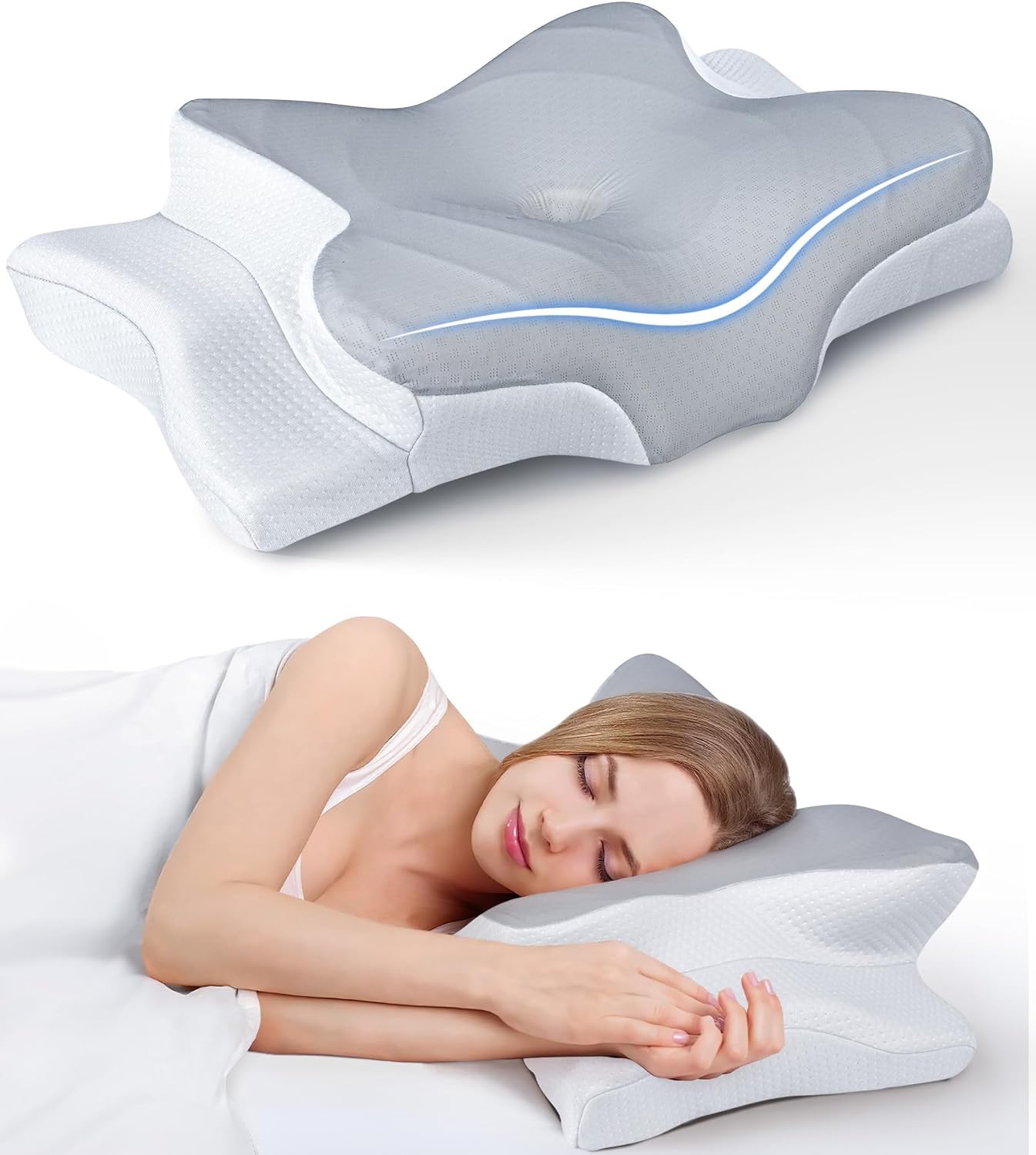
This review covers an Amazon product offered through affiliate links. Gadgifyr may earn a small commission if you buy — at no extra cost to you.

Seller:
Amazon
Cozyplayer Ultra Pain Relief Cooling Pillow
Adjustable Ergonomic Cervical Pillow with Cooling Fabric Designed for Consistent Neck Support Across Multiple Sleep Positions
Explore other Gadget Related Articles:

Smart Yoga Mats: Useful Coach or Hype?
Smart yoga mats can provide real-time feedback that may speed up learning for some beginners, but they are not required for yoga’s core benefits.

From Pore Vacuums to Blue Light: What Actually Treats Acne, and What Doesn’t
A science-driven breakdown of how acne develops, whether suction gadgets and blue light therapy can treat or prevent it, and the most effective alternatives for maintaining healthy, clear skin.

From Heat to Electricity: What Really Works for Period Cramp Pain?
Heat, gentle electrical stimulation, and some self-care habits can reduce period cramps for many people, but the best results usually come from combining proven methods rather than relying on one gadget.

1 / 15


About Gadgifyr
We uncover and review gadgets that genuinely make life better — from boosting focus and energy to improving everyday comfort and wellbeing.
No exaggerations, no empty promises. Just real reviews, grounded research, and practical tech that adds value — not noise.
When a gadget makes bold claims, we test the facts, check the science, and give you the clarity you need to decide with confidence.
Join the Gadgifyr Community
Stay ahead of the curve, together.
Get involved with a community that loves smart gadgets, real reviews, and tech that actually improves life.
Subscribe to the Newsletter
No spam. Just smart tech.
Get new reviews, science insights, and hand-picked gadget drops straight to your inbox.
Explore Gadgifyr's Blogs


Gadgifyr
January 11, 2026
-
5 min
Focus Mode On: 6 Work-From-Home Upgrades That Actually Help
Working from home? Discover six gadgets that keep you focused, organized, and in control—without overcomplicating your workspace.
Category

Gadgifyr
January 7, 2026
-
6 min
The Sleep Fix: Science-Backed Ways to Sleep Deeper and Wake Better
Struggling with restless nights? Discover what science really says about how to fall asleep faster, sleep deeper, and wake restored.
Category

Gadgifyr
January 10, 2026
-
6 min
Science-Backed Skin Tech: What Really Works and What Still Needs Proof
Can light, electricity, and heat truly transform your skin? A closer look at the science behind today’s most talked-about technologies.
Category


