
Do Home Scents and Diffusers Actually Improve Your Mood?
Home fragrance is marketed as an instant mood fix, and smell really is closely linked to emotion in the brain. This article looks at what controlled research shows about essential oils, diffusers, and scented candles, including a study that tests whether scent alone holds up once other factors are removed.

Gadgifyr
July 5, 2026
7 min
Real - World Performance
⚙️Scent has a real neurological link to mood. Brain-imaging research found smell directly activates the amygdala, the brain's emotion-processing center.
⚙️Inhaled aromatherapy shows genuine anxiety reduction. Large meta-analyses covering thousands of participants found statistically significant drops in anxiety scores from inhaled essential oils.
⚙️Inhalation beats massage for depression symptoms specifically. One meta-analysis found inhaling scent was the most effective delivery method, ahead of massage, capsules, or tea.
⚙️Not all "aromatherapy works" evidence holds up. A review isolating scent from massage found no added anxiety benefit from fragrance once touch was accounted for.
⚙️Scented candles carry a real air-quality tradeoff. Burning one measurably raised particulate matter and changed airborne bacteria in a controlled study, a downside diffusers avoid.
Good to Know
🔍Lavender, jasmine, and citrus oils consistently performed best across multiple anxiety-focused meta-analyses.
🔍Blended essential oils outperformed single oils like lavender alone for reducing depressive symptoms in one large review.
🔍Most measured benefits were short-term, reflecting how people felt shortly after exposure rather than lasting changes over weeks or months.
🔍Aromatherapy showed no measurable benefit for depressive symptoms specifically in postpartum or pregnant women in at least one meta-analysis.
🔍Oral lavender supplements, a different product from ambient scent, showed a dose-dependent effect, with higher doses outperforming lower doses and placebo.
🔍Burning a scented candle can raise particulate matter to over 1.5 times baseline levels within just a few minutes.
🔍Finer, smaller particles from candle burning stayed elevated in the air for longer and traveled farther than larger particles in tested rooms.
Scented candles and oil diffusers are sold as instant mood tools, promising to calm a stressful evening or sharpen a foggy afternoon just by changing what a room smells like. It's appealing, and smell really is closely tied to emotion in the brain. But does the scent itself do the psychological work, or is some of that reputation borrowed from other things happening alongside it, like a relaxing routine or a calming massage? This article looks at what research actually shows about home fragrance, essential oils, and mood, including a study that isolates scent from other factors.
Did You Know?
Smell is uniquely wired into the brain's emotional centers. Brain-imaging research found that unpleasant odors directly activate the amygdala, the brain's emotion and threat-processing hub, with stronger activation matching how unpleasant people rated the smell. This is real, measurable evidence that scent and emotion are neurologically linked.
Smell has a genuinely unique relationship with emotion in the brain. A brain-imaging study exposed healthy volunteers to unpleasant smells and measured blood flow in the amygdala, the brain region most associated with processing threat and emotion. Strongly unpleasant odors triggered clear activity increases in the amygdala and a connected region called the orbitofrontal cortex, and how strongly these regions activated tracked closely with how unpleasant people rated the smell.
This shows that scent triggers real, measurable emotional responses in the brain, not just a vague association. That's the legitimate scientific seed behind marketing claims about fragrance and mood. Whether everyday home scents produce a similarly meaningful, lasting effect is a separate question this article turns to next.
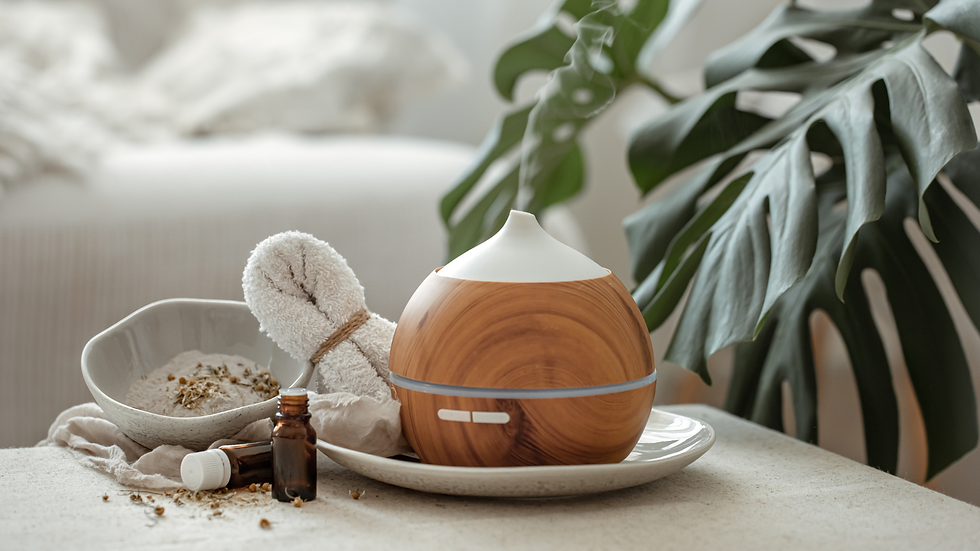
Large meta-analyses of inhaled essential oils found real, statistically significant reductions in anxiety scores: one pooling 32 trials found meaningful drops in both short-term and general anxiety, and a larger network analysis of 44 trials covering 3,419 people found similar reductions plus modest decreases in heart rate and blood pressure, with lavender, jasmine, and citrus oils performing best. A separate meta-analysis on depression found aromatherapy had a moderate overall effect on depressive symptoms, and notably, inhalation specifically outperformed massage, capsules, or tea as a delivery method, though it showed no benefit for postpartum or pregnant women.
However, one systematic review complicates the picture: when researchers compared aromatherapy massage directly against plain massage without any scent, there was no significant difference in anxiety relief between the two. That result suggests some of the "aromatherapy works" evidence in earlier studies, where scent and touch were combined, may reflect the benefit of massage itself rather than the fragrance. A separate look at oral lavender supplements found a real, dose-dependent anxiety-reducing effect, but that's a different product from ambient home scent entirely.
By the Numbers
A review looking specifically at aromatherapy massage found no significant difference in anxiety relief compared to plain massage without any scent at all, based on three controlled trials. That result hints some reported aromatherapy benefits may come from touch, not fragrance.
For someone deciding whether home scent is worth using for mood, the practical picture is genuinely encouraging but comes with an important caveat. Inhaling essential oils on their own, without massage, does have real supporting evidence, especially for depressive symptoms where inhalation was the single best delivery method tested. That means a diffuser alone, no massage or spa treatment required, has its own standalone evidence base and isn't purely riding on a touch-based placebo effect.
The caveat is that the anxiety-reduction studies most often measured short-term, immediate changes in how people felt right after exposure, not lasting therapeutic transformation, and the massage-isolation study is a useful reminder that not every positive aromatherapy headline can be taken at face value without checking what else was happening in the study alongside the scent.
KEY STATISTICS
44 trials, 3,419 people
A Large Body of Evidence
A network meta-analysis pooled 44 randomized trials covering 3,419 people testing 10 different essential oils against anxiety. This is a large, well-powered body of evidence, not a handful of small studies.
Moderate effect size
A Moderate, Real Effect on Mood
A meta-analysis on aromatherapy and depression found a moderate effect size for reducing depressive symptoms. In plain terms, that means a real, noticeable improvement on average, though not a dramatic or complete resolution of symptoms.
1.5x baseline in 5 minutes
Scented Candles Measurably Change the Air
In a controlled test, particulate matter near a burning scented candle rose to about 1.5 times its starting level within just 5 minutes, with finer particles staying elevated even further from the source.
Overall, scent genuinely can move the needle on short-term mood and anxiety for many people, backed by real brain imaging and dozens of trials, but it's a modest, temporary nudge rather than a cure, and not every reported benefit can be credited to fragrance alone once other factors like massage are accounted for.
If you're shopping for a diffuser or scented candle, a few things from this research are worth applying. Prioritize genuine essential oils with real testing behind them, lavender, citrus, and jasmine had the strongest evidence, over vague "fragrance oil" blends of undisclosed synthetic composition. For depression-related mood support specifically, inhalation-based products like diffusers have a slight edge over massage oils or other delivery methods in the research, so a diffuser isn't a downgrade from pricier spa-style products. If you're choosing between a diffuser and a scented candle, know that they aren't equivalent: a controlled study found that burning a scented candle raised particulate matter in the room to over 1.5 times baseline levels within minutes and measurably altered the mix of airborne bacteria, an air-quality tradeoff that comes from combustion, not from diffusers, which don't burn anything.
If you have asthma, are sensitive to smoke, or simply want to avoid unnecessary particulate exposure, a diffuser is the more cautious choice, and ventilating a room well during and after candle use is a reasonable precaution. Finally, treat home fragrance as a pleasant, low-cost supplement to stress management, not a replacement for treatment of diagnosed anxiety or depression.
RELATED READING

Gadgifyr could not find any relatable books about this topic that were not to advanced and/or technical.
-

EVIDENCE-BASED RELIABILITY
82%
Overall Score
7
Sources Used
6
Claim Types
32%
62%
25%
Inhaled essential oil scents reduce short-term anxiety
Aromatherapy's benefits come specifically from scent, not touch or other factors
Long-term Studies
This topic is backed by a strong body of evidence: multiple large meta-analyses covering thousands of participants, plus a brain-imaging study establishing a real neurological mechanism. The core claim that inhaled scent reduces short-term anxiety and depressive symptoms is well supported and consistently replicated. Where the evidence gets shakier is attributing that benefit specifically to fragrance in all contexts; a review isolating scent from massage found no added effect from the oil itself. Most studies measured short-term, immediate mood shifts rather than lasting change. The moderate score reflects genuine findings paired with real limits on what they actually prove.
Anxiety Reduction
Real, Modest
Scent vs. Touch Confound
Real Concern
Candle Air Quality
Real Downside
Best-Studied Oils
Lavender/Citrus
Long-Term Evidence
Limited
Best Delivery Method
Inhalation
AT A GLANCE - METRIC ACCURACY
The Consumer Takeaway
The science of home fragrance and mood is more solid than a lot of wellness marketing, but also more limited than the marketing suggests. Smell really does have a direct, measurable connection to the brain's emotional centers, and multiple large meta-analyses found genuine, statistically significant reductions in anxiety and depressive symptoms from inhaled essential oils, not just a placebo story. Inhalation even outperformed massage as a delivery method for depression specifically, which is a meaningful point in favor of plain diffusers over pricier spa-style treatments.
But the picture isn't uniformly positive: a review that isolated scent from massage found no added anxiety benefit from fragrance alone, a useful caution against assuming every positive aromatherapy study proves the scent itself did the work. There's also a genuine physical tradeoff worth knowing about: burning scented candles measurably worsens indoor air quality in a way that oil diffusers, which don't involve combustion, simply don't. The honest summary is that home scent is a real, modest mood tool with legitimate science behind it, best treated as a pleasant complement to stress management rather than a proven treatment on its own.
Zald, D. H., & Pardo, J. V. (1997). Emotion, olfaction, and the human amygdala: Amygdala activation during aversive olfactory stimulation. Proceedings of the National Academy of Sciences. PMID: 9108115.
Gong, M., Dong, H., Tang, Y., Huang, W., & Lu, F. (2020). Effects of aromatherapy on anxiety: A meta-analysis of randomized controlled trials. Journal of Affective Disorders. https://doi.org/10.1016/j.jad.2020.05.118
Tan, L., Liao, F. F., Long, L. Z., Ma, X. C., Peng, Y. X., Lu, J. M., Qu, H., & Fu, C. G. (2023). Essential oils for treating anxiety: A systematic review of randomized controlled trials and network meta-analysis. Frontiers in Public Health. PMID: 37325306.
Yap, W. S., Dolzhenko, A. V., Jalal, Z., Hadi, M. A., & Khan, T. M. (2019). Efficacy and safety of lavender essential oil (Silexan) capsules among patients suffering from anxiety disorders: A network meta-analysis. PMID: 31792285.
Hsu, C. H., Chi, C. C., Chen, P. S., Wang, S. H., Tung, T. H., & Wu, S. C. (2019). The effects of aromatherapy massage on improvement of anxiety among patients receiving palliative care: A systematic review of randomized controlled trials. PMID: 30817616.
Yun, H., Seo, J. H., Kim, Y. G., & Yang, J. (2025). Impact of scented candle use on indoor air quality and airborne microbiome. PMID: 40128575.
Cho, K., & Kim, M. (2023). Effects of aromatherapy on depression: A meta-analysis of randomized controlled trials. General Hospital Psychiatry. https://doi.org/10.1016/j.genhosppsych.2023.08.003
DID YOU GET ANY OF THAT?
Read a summarization of this page's content in question-answer format ▽ (click to open and collapse the content)
If smell activates the amygdala, does that prove diffusers reduce anxiety?
Not by itself. The brain-imaging study shows scent triggers real emotional brain activity, which establishes a plausible mechanism, but it doesn't directly measure anxiety relief from home diffuser use. That connection comes from the separate clinical trials on inhaled essential oils, which is why both pieces of evidence matter together.
Why did the massage study find no benefit from scent specifically?
Researchers compared aromatherapy massage to plain massage without any fragrance, which let them isolate the effect of scent from the effect of touch. Since anxiety scores were similar in both groups, the researchers concluded that touch, not the essential oil, likely drove most of the improvement seen in earlier combined studies.
Does this mean oil diffusers without massage don't work at all?
No, that's a separate question from the massage study. Multiple large meta-analyses tested pure inhalation without massage and still found real reductions in anxiety and depressive symptoms, and inhalation specifically outperformed massage for depression symptoms in one review, so diffuser-style use has its own supporting evidence.
Is a scented candle basically the same as a diffuser?
Not physically. Diffusers typically disperse scent through evaporation or fine mist without burning anything, while candles rely on combustion, which was shown to measurably raise particulate matter and change the airborne bacterial mix in a room. That's a meaningful physical difference beyond just the smell they produce.
Should I expect a diffuser to help with a diagnosed anxiety disorder?
The research reviewed here mostly measured short-term mood and anxiety changes in general or situational anxiety, not sustained treatment of diagnosed conditions. It's reasonable to view home fragrance as a pleasant, low-cost mood support tool, not a substitute for evaluated anxiety or depression treatment.
Gadgets Connected to These Scientific Insights
The gadgets shown here each rely on the science discussed in this article — sometimes directly, sometimes through a clever variation of the same underlying technology.
For the best experience, we recommend reading the summary first. It gives you a quick, clear understanding of how the technology works and helps you decide whether these gadgets match what you’re looking for.

This review covers an Amazon product offered through affiliate links. Gadgifyr may earn a small commission if you buy — at no extra cost to you.

Seller:
Amazon
AirScent Waterless Diffuser
A waterless cold-air scent diffuser designed to disperse undiluted fragrance oils with adjustable intensity and timed operation for homes, offices, and hospitality-style spaces.
Explore other Gadget Related Articles:

Timers, Breaks, and the Science of Staying Focused
Millions swear by the 25-minute Pomodoro timer — but does science actually support that specific number, or is the real story more complicated?

AI Planners, Voice Assistants, and Real Productivity
Everyone's using voice assistants and apps to stay organized — but does any of it actually make you more productive, or is paper still winning in some ways?

Air Purifiers, Disinfectants, and Your Immune System
Everyone's heard that being 'too clean' can backfire on your immune system — but is that actually true, or is something else going on?

1 / 17


About Gadgifyr
We uncover and review gadgets that genuinely make life better — from boosting focus and energy to improving everyday comfort and wellbeing.
No exaggerations, no empty promises. Just real reviews, grounded research, and practical tech that adds value — not noise.
When a gadget makes bold claims, we test the facts, check the science, and give you the clarity you need to decide with confidence.
Join the Gadgifyr Community
Stay ahead of the curve, together.
Get involved with a community that loves smart gadgets, real reviews, and tech that actually improves life.
Subscribe to the Newsletter
No spam. Just smart tech.
Get new reviews, science insights, and hand-picked gadget drops straight to your inbox.
Explore Gadgifyr's Blogs

Gadgifyr
August 24, 2026
-
14 min read
Training Smarter: The Science of Effective Muscle Growth
A myth-checked, research-based look at what genuinely drives muscle growth — and where popular fitness claims outpace the science.
Category

Gadgifyr
January 27, 2026
-
12 min read
Heat vs. Cold Therapy: What Ice Baths, Saunas, and Contrast Therapy Actually Do
A science-backed look at heat and cold therapy — from cold plunges and saunas to contrast therapy — covering what's proven, what's still early, and which recovery gadgets hold up.
Category

Gadgifyr
February 11, 2026
-
15 min read
What plant-derived oils can realistically do for hair, sleep, mood, and everyday wellbeing
An honest, research-based breakdown of what essential oils can realistically do for sleep, hair, mood, and daily wellbeing — plus the gadgets built around them.
Category


