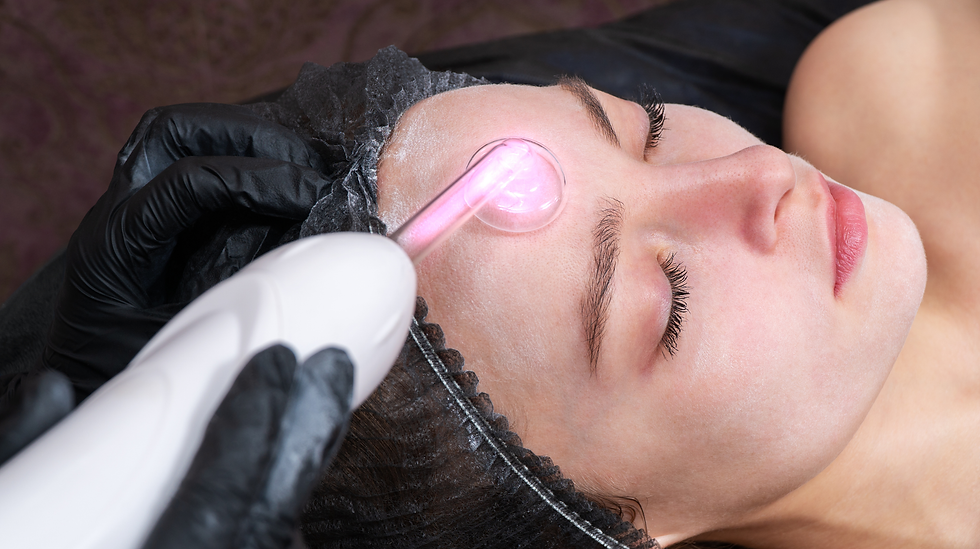
Facial Vibration Devices: Borrowed Science or Real Results?
Facial vibration tools promise firmer, younger-looking skin using mechanical stimulation. Here's what the actual skin research shows - and how much of the science is really about bone and muscle, not skin.

Gadgifyr
June 8, 2026
8 min read
Real - World Performance
⚙️The one direct skin study found real, frequency-specific effects. Cyclic mechanical stimulation increased collagen-related protein expression in skin tissue, with peak effect around 75Hz.
⚙️The strongest skin evidence combined the device with a skincare cream. No study tested the device completely alone against no treatment, so the device-only effect isn't isolated.
⚙️Whole-body vibration's effect on bone density is small and site-specific. Meta-analyses found modest hip improvements in some groups but no effect at the spine or in young adults.
⚙️Muscle strength responded more consistently than bone density did. A meta-analysis found significant leg strength gains from whole-body vibration even when bone density showed no change.
⚙️Bone- and muscle-vibration research uses different frequencies than the skin study. Most bone research uses 20-40Hz, while the skin study's peak effect was at 75Hz, a different application entirely.
Good to Know
🔍Mechanotransduction, cells sensing and responding to mechanical force, is the general biological principle behind all vibration research, but the specific outcome depends heavily on tissue type, frequency, and delivery method.
🔍The one skin-specific study gathered here used a device applying localized cyclic strain to facial skin, not a whole-body vibrating platform, which is a meaningfully different technology and application.
🔍A rabbit study testing vibration for bone healing found no measurable benefit from vibration itself, with outcomes explained entirely by which grafting material was used instead.
🔍Whole-body vibration research shows the effect on bone density varies significantly by body region - some hip areas respond better than others, and the lumbar spine often shows little to no measurable change.
🔍Vibration frequency, amplitude, session duration, and total treatment length all appeared to independently affect outcomes across the studies gathered here, meaning small differences in how a device is used can change the result.
🔍The skin study's clinical trial used a blinded evaluator to assess wrinkle and sagging improvements, which is a meaningful methodological strength for a small trial.
🔍No adverse effects were reported in the skin device trial, and participants described it as comfortable and easy to use.
Facial vibration devices, handheld tools that deliver rapid mechanical pulses to the skin, are marketed as a way to stimulate collagen, firm sagging skin, and reduce wrinkles through "proven" vibration technology. That framing often leans on a broader, decades-old body of research into how vibration affects living tissue, most of which was actually conducted on bone and muscle, not facial skin.
This article looks at what the one directly relevant skin study actually found, what the much larger body of vibration research on bone and muscle really shows, and how much of that bone-and-muscle evidence can honestly be borrowed to support a claim about facial skin.
Did You Know?
In a lab study on real human skin tissue, applying cyclic mechanical stimulation at different frequencies produced different results, with the biggest increase in collagen-related and elastic-fiber proteins occurring specifically around 75Hz. Higher or lower frequencies didn't produce the same effect, showing that for a facial vibration device, the specific frequency used may matter as much as whether vibration is used at all.
The general biological principle behind vibration devices is called mechanotransduction: living cells, including skin fibroblasts and bone-forming osteoblasts, can sense mechanical force and respond by changing which genes they activate, sometimes producing more of certain structural proteins. This principle is well established in cell biology broadly. But the specific outcome depends heavily on the tissue involved, the exact frequency and force applied, and how the vibration is delivered.
A handheld device applying cyclic strain to facial skin at 65-85Hz is a meaningfully different intervention from standing on a platform that vibrates the whole body at 20-90Hz to stimulate bone and muscle, even though both are broadly described as "vibration therapy." Much of the marketing language around facial vibration devices draws credibility from this second, much larger body of bone-and-muscle research, which is worth examining on its own terms.

Only one study in the gathered research directly tested vibration on facial skin. It found that cyclic mechanical stimulation of skin tissue in a lab dish increased expression of several structural proteins, including collagen precursors, fibrillin, and tropoelastin, with the strongest effect at 75Hz specifically. In a small follow-up trial, 20 women aged 65-75 used a vibration device alongside a commercial anti-aging cream for eight weeks, compared with 22 women using the cream alone; the combination reduced neck sagging, which the cream alone did not achieve, and amplified other improvements.
However, this trial couldn't isolate the device's effect on its own, since every participant who used the device was also using the cream, and the sample size was small. The much larger body of vibration research, whole-body vibration for bone density in older adults, tells a more mixed story than "vibration stimulates tissue" marketing implies. One meta-analysis found only small, site-specific increases in hip bone density in postmenopausal women, with no effect at the spine; a separate, more recent meta-analysis found significant increases in some hip regions but no effect on the lumbar spine as a whole or total hip.
Individual trials were sometimes flatly negative: a 12-month randomized trial found no effect on muscle and tendon density at all, and a bone-healing study in rabbits found vibration provided no measurable benefit over material type alone. Muscle strength fared better than bone density did: a meta-analysis found consistent, significant improvements in leg strength and functional measures like jumping height, even when bone density didn't improve.
By The Numbers
A meta-analysis of whole-body vibration therapy, the much larger and more established body of vibration research, found it increased hip bone density in postmenopausal women by just 0.015 g/cm², a small but statistically real improvement, and found no significant effect at all on spine bone density in the same group.
A separate 12-month randomized trial of whole-body vibration found no measurable effect on muscle and tendon density whatsoever. Even in its most-studied application, vibration's real-world benefits turn out to be modest and highly specific to the body site and parameters used.
For someone considering a facial vibration device, this research suggests real caution about where the supporting evidence actually comes from. The one study testing an actual skin-massaging device found genuine, measurable changes in skin protein expression at the cellular level, and a real, if modest and confounded, improvement when combined with a skincare cream, which is a legitimate, if narrow, starting point.
What it doesn't support is treating the much larger "vibration is proven to help aging tissue" narrative, largely built on bone and muscle research, as direct evidence for facial skin specifically. That broader vibration research is itself mixed: bone density improvements from whole-body vibration are small and highly dependent on the specific body region, frequency, amplitude, and duration used, and several individual studies found no benefit at all.
Muscle strength responded more consistently than bone did, but neither finding transfers automatically to a handheld device vibrating facial skin at a different frequency for a few minutes a day. The device-specific frequency identified as most effective for skin, 75Hz, doesn't match the 20-40Hz range most commonly used in bone-density research, reinforcing that these are genuinely separate applications rather than one technology proven for multiple uses.
KEY STATISTICS
Peak effect at 75Hz
The Frequency That Mattered Most for Skin
In lab testing on real skin tissue, collagen-related protein expression increased the most at a stimulation frequency of 75Hz, with different frequencies in the 65-85Hz range producing smaller effects.
20 vs 22 women, 8 weeks
Scale of the Only Skin Device Clinical Trial
The only clinical trial testing a facial vibration device involved 20 women using the device plus an anti-aging cream, compared with 22 women using the cream alone, over 8 weeks - a small sample with no device-only comparison group.
0.015 g/cm² hip BMD
The Real-World Size of Vibration's Bone Benefit
A meta-analysis found whole-body vibration increased hip bone density in postmenopausal women by just 0.015 grams per square centimeter - a statistically real but genuinely small improvement, with no significant effect found at the spine.
Taken together, the research supports treating facial vibration devices as a plausible, mechanistically reasonable idea with real but thin direct evidence, not as an extension of a large, settled body of proof, because that larger body of proof is about a different tissue, delivered differently, and is itself considerably more mixed than marketing tends to suggest.
For anyone considering a facial vibration device, a few checks are worth applying. Look specifically for skin-focused research, not general claims about "vibration therapy" or references to bone density studies, since those use different frequencies, delivery methods, and target entirely different tissue; a legitimate claim about facial skin should point to skin-specific research. Treat frequency claims with real specificity in mind: the one skin study gathered here found effects concentrated around 75Hz, so a device operating at a very different frequency isn't automatically covered by that same evidence, regardless of how the marketing frames it.
Understand that the strongest available skin evidence combined the device with a skincare product and never tested the device completely alone against no treatment, so claims that isolate the device's effect specifically go beyond what that research actually demonstrated. If bone or muscle health is the actual goal rather than skin appearance, know that whole-body vibration's evidence is genuinely stronger for muscle strength than for bone density, and that bone density benefits, where they exist, are small, and depend heavily on matching the right frequency, amplitude, and body region, details worth checking against the specific product and its stated parameters rather than assuming vibration works uniformly for every aging-related concern.
RELATED READING

EVIDENCE-BASED RELIABILITY
38%
Overall Score
7
Sources Used
5
Claim Types
25%
40%
15%
Facial Vibration Devices Increase Collagen and Reduce Skin Aging Signs
Vibration Therapy Is a Broadly Proven Anti-Aging Technology
Long-term Studies
This topic has only one source directly testing facial skin, showing a real but narrow, frequency-specific effect on collagen-related proteins, combined with a small clinical trial that couldn't isolate the device from the cream it was paired with. The other six sources cover whole-body vibration for bone and muscle, a much larger but also mixed body of evidence: modest, site-specific bone density gains, more consistent muscle strength benefits, and some flatly null trials. These bone/muscle findings don't transfer directly to facial skin devices, since frequencies and delivery methods differ substantially. Overall, the specific skin claim is thin; the broader 'vibration therapy' framing is more mixed than commonly presented.
Skin Protein Expression
Real, Narrow
Device + Cream Trial
Confounded
Bone Density (WBV)
Small, Mixed
Long-Term Evidence
Limited
Muscle Strength (WBV)
More Consistent
Device Alone
Untested
AT A GLANCE - METRIC ACCURACY
The Consumer Takeaway
The research on facial vibration devices reveals a real, if narrow, scientific foundation surrounded by a much larger body of evidence that doesn't actually apply to skin the way marketing sometimes implies. The one study that directly tested vibration on skin tissue found genuine, frequency-specific increases in collagen-related proteins, with the strongest effect around 75Hz, and a small clinical trial found a device combined with anti-aging cream outperformed the cream alone, including a reduction in neck sagging the cream couldn't achieve on its own.
That's a real, if modest, result, though it couldn't isolate the device's effect from the cream it was paired with. The much larger vibration literature, mostly whole-body vibration research for bone density and muscle strength in older adults, tells a considerably more mixed story than "vibration stimulates tissue" framing suggests: bone density improvements are small and vary by body region, several individual trials found no effect at all, and this research used entirely different frequencies and delivery methods than the skin study.
None of this makes facial vibration devices fraudulent. It means the honest evidence specifically supports a modest, cellular-level effect on skin proteins, at a specific frequency, when combined with a topical product, not a settled, broadly-proven anti-aging technology borrowed from research on an entirely different part of the body.
Caberlotto, E., Ruiz, L., Miller, Z., Poletti, M., & Tadlock, L. (2017). Effects of a skin-massaging device on the ex-vivo expression of human dermis proteins and in-vivo facial wrinkles. PLOS ONE.
Karadas, O., Mese, G., & Ozcivici, E. (2020). Low magnitude high frequency vibrations expedite the osteogenesis of bone marrow stem cells on paper based 3D scaffolds. Cellulose.
Puhar, I., Ma, L., Suleimenova, D., Chronopoulos, V., & Mattheos, N. (2016). The effect of local application of low-magnitude high-frequency vibration on the bone healing of rabbit calvarial defects—a pilot study. International Journal of Implant Dentistry.
Lau, R. W. K., Liao, L.-R., Yu, F., Teo, T., Chung, R. C. K., & Pang, M. Y. C. (2011). The effects of whole body vibration therapy on bone mineral density and leg muscle strength in older adults: A systematic review and meta-analysis. Clinical Rehabilitation.
Slatkovska, L., Alibhai, S. M. H., Beyene, J., & Cheung, A. M. (2010). Effect of whole-body vibration on BMD: A systematic review and meta-analysis. Osteoporosis International.
Chen, W., Li, X., & Chen, C. (2025). Whole-body vibration training and bone mineral density in older adults: An updated systematic review and meta-analysis. BMC Musculoskeletal Disorders.
Boggild, M. K., Tomlinson, G., Erlandson, M. C., Szabo, E., Giangregorio, L. M., Craven, B. C., Slatkovska, L., Alibhai, S. M. H., & Cheung, A. M. (2019). Effects of whole-body vibration therapy on distal tibial myotendinous density and volume: A randomized controlled trial in postmenopausal women. JBMR Plus.
DID YOU GET ANY OF THAT?
Read a summarization of this page's content in question-answer format ▽ (click to open and collapse the content)
Does the research on facial vibration devices actually show they work?
There's a real but narrow signal. One study found vibration applied to skin tissue increased expression of collagen-related proteins, with the strongest effect at a specific frequency (75Hz), and a small trial found a device combined with anti-aging cream improved results, including neck sagging, beyond the cream alone. It's genuine evidence, but based on limited data that couldn't isolate the device's effect completely.
Isn't vibration therapy already proven to work, based on all the bone research?
That bone research exists, but it's more mixed than it's often presented, and it doesn't directly apply to skin. Meta-analyses on whole-body vibration for bone density found small, site-specific improvements at best, with several individual trials finding no effect at all, and it used different frequencies and delivery methods than the facial skin study.
Does frequency actually matter for vibration devices?
Based on the research gathered here, yes, significantly. The skin study found the biggest increase in collagen-related proteins specifically around 75Hz; different frequencies produced different results. Bone research similarly found effects varied by frequency, amplitude, and which body region was targeted, so a device's specific settings matter, not just whether it vibrates.
Can a facial vibration device work on its own, without a skincare product?
That specific question hasn't actually been tested in the research gathered here. The trial that found real improvements used the device alongside a commercial anti-aging cream in every participant, so there's no direct evidence showing what the device does completely on its own, without a topical product paired with it.
Does vibration therapy actually build bone density or muscle, the way it's sometimes marketed for anti-aging?
It depends on which one. Whole-body vibration research found more consistent benefits for muscle strength, significant improvements in leg strength and functional measures, than for bone density, where effects were small, inconsistent, and sometimes completely absent depending on the body region and study.
Gadgets Connected to These Scientific Insights
The gadgets shown here each rely on the science discussed in this article — sometimes directly, sometimes through a clever variation of the same underlying technology.
For the best experience, we recommend reading the summary first. It gives you a quick, clear understanding of how the technology works and helps you decide whether these gadgets match what you’re looking for.
Explore other Gadget Related Articles:

Air Purifiers, Disinfectants, and Your Immune System
Everyone's heard that being 'too clean' can backfire on your immune system — but is that actually true, or is something else going on?

Loud Sound And The Science Of Hearing Damage
Your hearing damage from loud sound is permanent, but do noise-canceling headphones and hearing apps actually help you avoid it in the first place?

What Massage Actually Does, According To Research
Everyone says massage lowers your stress hormones, but does that explanation actually hold up, and do massage guns deliver the same benefits?

1 / 14


About Gadgifyr
We uncover and review gadgets that genuinely make life better — from boosting focus and energy to improving everyday comfort and wellbeing.
No exaggerations, no empty promises. Just real reviews, grounded research, and practical tech that adds value — not noise.
When a gadget makes bold claims, we test the facts, check the science, and give you the clarity you need to decide with confidence.
Join the Gadgifyr Community
Stay ahead of the curve, together.
Get involved with a community that loves smart gadgets, real reviews, and tech that actually improves life.
Subscribe to the Newsletter
No spam. Just smart tech.
Get new reviews, science insights, and hand-picked gadget drops straight to your inbox.
Explore Gadgifyr's Blogs

Gadgifyr
August 24, 2026
-
14 min read
Training Smarter: The Science of Effective Muscle Growth
A myth-checked, research-based look at what genuinely drives muscle growth — and where popular fitness claims outpace the science.
Category

Gadgifyr
January 27, 2026
-
12 min read
Heat vs. Cold Therapy: What Ice Baths, Saunas, and Contrast Therapy Actually Do
A science-backed look at heat and cold therapy — from cold plunges and saunas to contrast therapy — covering what's proven, what's still early, and which recovery gadgets hold up.
Category

Gadgifyr
February 11, 2026
-
15 min read
What plant-derived oils can realistically do for hair, sleep, mood, and everyday wellbeing
An honest, research-based breakdown of what essential oils can realistically do for sleep, hair, mood, and daily wellbeing — plus the gadgets built around them.
Category


