
Flossing vs. Waterjetting: Scientific Comparison for Oral Health
String floss and water flossers both claim to clean what a toothbrush can't reach, but the clinical evidence behind each is more specific than most product marketing suggests. This article compares what head-to-head trials actually show, for which users, and whether combining both tools is worth the extra step.

Gadgifyr
December 18, 2025
9 min
Real - World Performance
⚙️Interdental brushes outperformed floss in direct comparisons for reducing both gingivitis and plaque — the strongest head-to-head result in the manual device category.
⚙️Water flossers significantly reduced bleeding and inflammation compared to floss in a 4-week trial, alongside meaningful reductions in plaque scores.
⚙️Orthodontic patients saw comparable results from super floss and water flossers overall, with water flossers showing a modest edge on hard-to-reach molar surfaces.
⚙️Implant users with gum inflammation benefited similarly from oral irrigators and interdental brushes, with irrigators showing an edge at several time points.
⚙️Patient preference consistently favored power-driven tools, suggesting real-world compliance may be higher with water flossers than with string floss.
⚙️Adverse events were rare across all tools, with only one isolated case of soft tissue trauma reported from improper use of a mechanical device.
Good to Know
🔍In a direct comparison, interdental brushes reduced both gingivitis and plaque more than traditional floss — one of the clearest head-to-head results in the entire research base.
🔍Water flossing was linked to a reduction in bad breath after 12 weeks of regular use, possibly due to changes in the bacterial composition of dental plaque.
🔍For orthodontic patients, both super floss and water flossers performed similarly well overall, giving braces-wearers a genuine choice based on personal preference.
🔍No serious adverse events were reported for water flossers or floss across any of the trials reviewed, supporting both as low-risk daily habits.
🔍Most studies measuring patient preference favored power-driven tools like water flossers, which may translate to better long-term daily compliance.
🔍Evidence for flossing's benefit over toothbrushing alone was rated as only low-certainty in the largest available Cochrane review — a surprising finding given how often floss is recommended.
🔍For dental implant patients with gum inflammation, an oral irrigator performed as well as an interdental brush, suggesting it's a reasonable alternative for this specific group.
For anyone standing in the dental aisle deciding between a box of floss and a water flosser, the choice can feel oddly high-stakes. Both tools target the same problem: plaque and food debris trapped between teeth, in the spaces a toothbrush physically cannot reach.
Left untreated, this buildup contributes to gingivitis — inflamed, bleeding gums — and over time, more serious gum disease. The everyday question is simple: which tool actually works better, and does it matter which one a person picks?
⚡DID YOU KNOW
A large Cochrane review covering 35 randomised trials and nearly 4,000 participants found that flossing, in addition to toothbrushing, may reduce gingivitis compared with toothbrushing alone. But the same review rated this evidence as only low-certainty — a reminder that "proven to work" and "the most rigorously proven" aren't always the same thing in dental research.
The research base for interdental cleaning splits into two broad tool categories: manual devices (floss, interdental brushes, and wooden or rubber cleaning sticks) and power-driven devices (water flossers, also called oral irrigators, and motorised interdental brushes).
A major systematic review pooling data from 35 trials and 3,929 adults found that floss used alongside toothbrushing may reduce gingivitis at one, three, and six months compared with toothbrushing alone — though the certainty of this finding was rated low. Interestingly, that same review found interdental brushes performed even more effectively than floss at reducing both gingivitis and plaque in studies directly comparing the two.
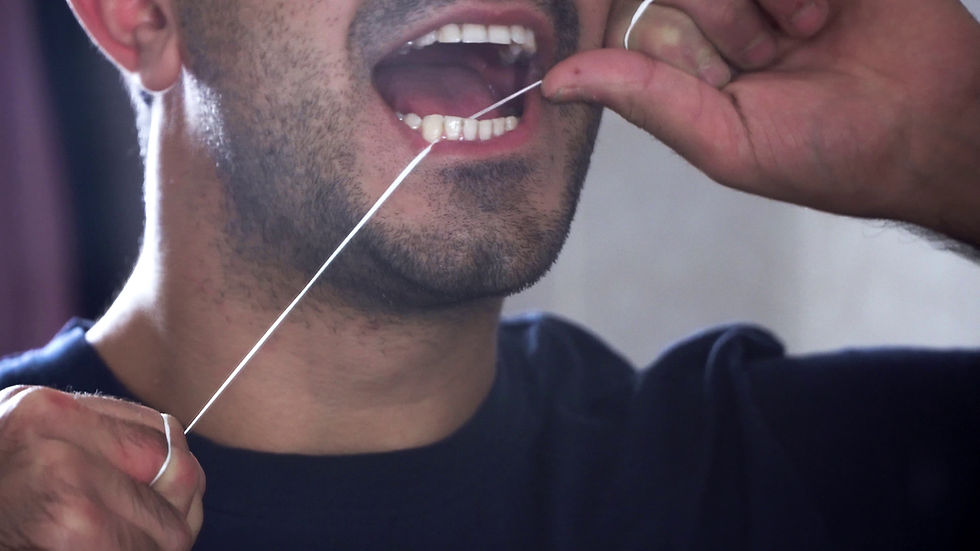
Water flossers have their own growing body of evidence. In a 4-week randomised trial comparing a standard water flosser, a microbubble-infused water flosser, and traditional dental floss — all alongside a manual toothbrush — the water flosser group showed a statistically significant greater reduction in bleeding on probing, gum inflammation, and plaque scores than the floss group. A separate 12-week trial of people with gingivitis found that adding water flossing to toothbrushing effectively reduced gingival inflammation compared with toothbrushing alone, and even reduced oral malodor (bad breath) by week 12 — an effect the researchers linked to a shift in the bacterial makeup of dental plaque toward less odor-causing bacteria.
For people with orthodontic braces, a trial comparing super floss against a water flosser found both methods reduced plaque scores substantially and to a similar overall degree, though the water flosser showed a slightly larger effect on hard-to-reach molar surfaces. For dental implant patients with peri-implant mucositis — gum inflammation around an implant — a 12-week trial found an oral irrigator performed as well as, and at some time points better than, an interdental brush in reducing inflammation markers.
WORTH KNOWING
A broader meta-analysis of power-driven interdental tools across 16 trials and 1,258 participants found that water flossers did not outperform toothbrushing alone on plaque scores specifically, but did significantly reduce gingival bleeding. Compared directly against flossing, power-driven tools achieved comparable results — not necessarily superior ones. Notably, most studies on patient preference favored the power-driven tool, largely due to ease of use.
For the everyday reader, the practical takeaway is nuanced rather than a simple winner-takes-all verdict. Interdental brushes have the strongest evidence for reducing both plaque and gingivitis when compared directly against floss. Water flossers show a real, measurable benefit for bleeding gums and gingival inflammation, and may be especially useful for orthodontic patients, implant users, or anyone who finds string floss difficult to use consistently.
Traditional floss remains effective, but the certainty behind its benefit is rated lower than many assume, partly due to how hard it is to design a fully unbiased floss trial — since participants always know which tool they're using. Across nearly every device type studied, ease of use and consistent daily habit appear to matter as much as which specific tool is chosen.
KEY STATISTICS
3,929
Trial scale (floss review)
The largest review of interdental cleaning pooled data from 35 randomised trials covering nearly 4,000 adult participants — making it the most comprehensive evidence base available on this topic.
0.41 pts
Water flosser bleeding reduction
In a 4-week trial, the water flosser group reduced whole-mouth bleeding-on-probing scores by 0.41 points, more than double the 0.19-point reduction seen in the floss-only group.
1,258
Power tool trial participants
A dedicated meta-analysis of power-driven interdental tools (like water flossers) drew on 16 trials and 1,258 participants, giving a solid evidence base specifically for these devices.
No single device emerged as a universal winner across every study. What the evidence does make clear is that doing some form of interdental cleaning, consistently, outperforms toothbrushing alone — and the best tool is often the one a person will actually use every day.
RELATED READING


EVIDENCE-BASED RELIABILITY
73%
Overall Score
6
Sources Used
6
Claim Types
45%
70%
28%
Water flosser vs. gingivitis
Floss vs. gingivitis
Long-term Studies
Evidence quality is mixed across tools — generally low-to-moderate certainty industry-wide, reflecting the inherent difficulty of blinding participants to which device they're using.
Gingival bleeding reduction
Good
Plaque reduction (floss)
Moderate
Peri-implant mucositis care
Good
User compliance / ease of use
Excellent
Long-term durability of results
Poor
Bad breath reduction
Moderate
AT A GLANCE - METRIC ACCURACY
The Consumer Takeaway
The flossing-versus-water-flosser debate doesn't resolve into a single clear winner — instead, the research points to a more useful conclusion: which tool works best depends on the user and the specific oral health goal. For reducing gum bleeding and inflammation, water flossers showed a measurable edge over string floss in multiple trials, and were generally preferred by users for ease of use. For raw plaque and gingivitis reduction in head-to-head comparisons, interdental brushes actually outperformed both floss and water flossers in some reviews — a result that surprises many people, since floss remains the most commonly recommended tool.
For specific groups — orthodontic patients, implant users, and people managing gingivitis — the evidence suggests multiple tools can work comparably well, which shifts the more important question from "which device is objectively best" to "which device will actually get used every day." Adverse events were rare across the board, keeping the overall risk low regardless of which method is chosen. What the research consistently rewards isn't a specific brand or technology, but consistent daily interdental cleaning of any kind — the habit appears to matter more than the tool.
Worthington, H. V., MacDonald, L., Poklepovic Pericic, T., Sambunjak, D., Johnson, T. M., Imai, P., & Clarkson, J. E. (2019). Home use of interdental cleaning devices, in addition to toothbrushing, for preventing and controlling periodontal diseases and dental caries. Cochrane Database of Systematic Reviews, 4, CD012018.
Mancinelli-Lyle, D., Qaqish, J. G., Goyal, C. R., & Schuller, R. (2023). Efficacy of water flossing on clinical parameters of inflammation and plaque: A 4-week randomized controlled trial. International Journal of Dental Hygiene.
Xu, X., Zhou, Y., Liu, C., Zhao, L., Zhang, L., Li, H., Li, Y., & Cheng, X. (2023). Effects of water flossing on gingival inflammation and supragingival plaque microbiota: A 12-week randomized controlled trial. Clinical Oral Investigations.
Sawan, N., Ben Gassem, A., Alkhayyal, F., Albakri, A., Al-Muhareb, N., & Alsagob, E. (2022). Effectiveness of super floss and water flosser in plaque removal for patients undergoing orthodontic treatment: A randomized controlled trial. International Journal of Dentistry, 2022, 1344258.
Edlund, P., Bertl, K., Pandis, N., & Stavropoulos, A. (2023). Efficacy of power-driven interdental cleaning tools: A systematic review and meta-analysis. Clinical and Experimental Dental Research.
Tütüncüoğlu, S., Cetinkaya, B. O., Pamuk, F., Avci, B., Keles, G. C., Kurt-Bayrakdar, S., & Lütfioğlu, M. (2021). Clinical and biochemical evaluation of oral irrigation in patients with peri-implant mucositis: A randomized clinical trial. Clinical Oral Investigations.
DID YOU GET ANY OF THAT?
Read a summarization of this page's content in question-answer format ▽ (click to open and collapse the content)
Is a water flosser actually better than traditional string floss?
For reducing bleeding and gum inflammation, water flossers showed a statistically significant advantage over floss in a 4-week trial. However, for raw plaque removal compared head-to-head, results have been more mixed, and in some trials interdental brushes outperformed both. The honest answer is that water flossers have an edge for gum health specifically, not a universal advantage across every measure.
Should orthodontic patients use floss or a water flosser?
Either works well. A trial comparing super floss and water flossers in orthodontic patients found both significantly reduced plaque scores, with no meaningful overall difference, though the water flosser had a slight edge on hard-to-reach molar surfaces. The better choice often comes down to which tool a patient will use consistently around brackets and wires.
Are interdental brushes really more effective than floss?
In direct comparisons, yes — interdental brushes reduced gingivitis and plaque more effectively than floss in a major systematic review. This is a less commonly known finding, since floss is more widely recommended by default, but the evidence favors interdental brushes when the goal is maximum plaque and gum inflammation reduction.
Is an oral irrigator a good option for someone with a dental implant?
Yes. In patients with peri-implant mucositis, a 12-week trial found an oral irrigator performed as well as, and at some points better than, an interdental brush in reducing inflammation markers around the implant. This makes water flossers a reasonable alternative for implant care specifically.
Gadgets Connected to These Scientific Insights
The gadgets shown here each rely on the science discussed in this article — sometimes directly, sometimes through a clever variation of the same underlying technology.
For the best experience, we recommend reading the summary first. It gives you a quick, clear understanding of how the technology works and helps you decide whether these gadgets match what you’re looking for.
Explore other Gadget Related Articles:

Air Purifiers, Disinfectants, and Your Immune System
Everyone's heard that being 'too clean' can backfire on your immune system — but is that actually true, or is something else going on?

Loud Sound And The Science Of Hearing Damage
Your hearing damage from loud sound is permanent, but do noise-canceling headphones and hearing apps actually help you avoid it in the first place?

What Massage Actually Does, According To Research
Everyone says massage lowers your stress hormones, but does that explanation actually hold up, and do massage guns deliver the same benefits?

1 / 14


About Gadgifyr
We uncover and review gadgets that genuinely make life better — from boosting focus and energy to improving everyday comfort and wellbeing.
No exaggerations, no empty promises. Just real reviews, grounded research, and practical tech that adds value — not noise.
When a gadget makes bold claims, we test the facts, check the science, and give you the clarity you need to decide with confidence.
Join the Gadgifyr Community
Stay ahead of the curve, together.
Get involved with a community that loves smart gadgets, real reviews, and tech that actually improves life.
Subscribe to the Newsletter
No spam. Just smart tech.
Get new reviews, science insights, and hand-picked gadget drops straight to your inbox.
Explore Gadgifyr's Blogs

Gadgifyr
August 24, 2026
-
14 min read
Training Smarter: The Science of Effective Muscle Growth
A myth-checked, research-based look at what genuinely drives muscle growth — and where popular fitness claims outpace the science.
Category

Gadgifyr
January 27, 2026
-
12 min read
Heat vs. Cold Therapy: What Ice Baths, Saunas, and Contrast Therapy Actually Do
A science-backed look at heat and cold therapy — from cold plunges and saunas to contrast therapy — covering what's proven, what's still early, and which recovery gadgets hold up.
Category

Gadgifyr
February 11, 2026
-
15 min read
What plant-derived oils can realistically do for hair, sleep, mood, and everyday wellbeing
An honest, research-based breakdown of what essential oils can realistically do for sleep, hair, mood, and daily wellbeing — plus the gadgets built around them.
Category


