More Than Just Clean: How Reducing Dust Can Improve Your Well-Being
This review summarizes recent findings on harmful chemicals and heavy metals found in household dust. It highlights the risks to children and adults from everyday exposure, even in well-maintained homes.
What the Science Says
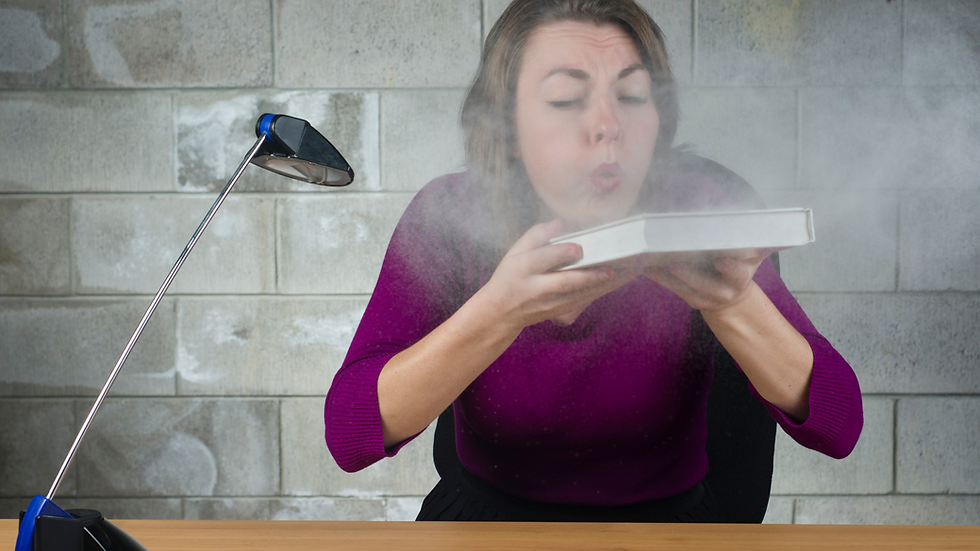
Indoor dust is far more than a simple nuisance - it is a reservoir for harmful substances emitted by consumer products, furnishings, and environmental sources. A series of reviews and meta-analyses has documented the consistent presence of endocrine-disrupting chemicals (EDCs), heavy metals, and industrial additives in household dust, with potential health consequences, especially for children.
Across U.S. homes, phthalates, phenols, flame retardants, and perfluoroalkyl substances (PFAS) were found at measurable concentrations in nearly every sample reviewed, with phthalates topping the list in terms of volume and exposure potential (Mitro et al., 2016).
Estimated residential intakes from dust ingestion, inhalation, and dermal contact indicated that exposure levels for several substances - particularly certain phthalates and flame retardants - were high enough to warrant health concern. Many of these chemicals share hazard traits such as endocrine disruption and reproductive toxicity.

Heavy metals such as lead (Pb), arsenic (As), and chromium (Cr) were also frequently detected in indoor dust samples, particularly in urban and industrial settings (Tan et al., 2016).
While some levels remained below immediate toxicity thresholds, the Hazard Index (HI) for children often exceeded safe limits, with specific concern for non-carcinogenic effects of As and Pb. Children are particularly vulnerable due to their frequent hand-to-mouth behavior and developing bodies, which can amplify the impact of low-level exposures.
More recent data (Zhu et al., 2023) confirm that even banned or phased-out substances like BPA, DEHP, and PFOS are still prevalent in indoor dust. At the same time, newer chemical alternatives such as BPS, BPF, and DBDPE - some of which are also suspected endocrine disruptors- are appearing more frequently.
Despite individual compound levels often falling below reference intake values, the cumulative exposure to multiple EDCs remains under-explored and could pose unrecognized health risks through synergistic effects.
Related Books ▼
Gadgifyr could not find any relatable books about this topic that were not to advanced and/or technical.
-

Real - World Performance
⚙️ Phthalates and flame retardants dominate dust samples, showing the highest exposure potential in homes.
⚙️ Children face elevated health risks, especially in urban environments with legacy pollutants.
⚙️ Banned EDCs remain persistent indoors, despite regulatory action.
⚙️ Newer chemicals replacing older toxicants are increasingly found in higher concentrations.
⚙️ Dust is confirmed as a significant exposure pathway for both legacy and emerging contaminants.
Good to Know
🔍 Cumulative exposure to multiple chemicals is underestimated in current risk assessments.
🔍 Carpets, upholstery, and electronics are major sources of persistent indoor contaminants.
🔍 Children under 6 are especially at risk from dust-borne heavy metals like lead and arsenic.
🔍 Many newer chemical substitutes may be as hazardous as those they replace.
🔍 Urban homes and those near industrial areas show significantly higher dust toxicity.
🔍 Routine cleaning reduces dust levels but does not eliminate chemical residues.
🔍 Inhalation, skin contact, and ingestion are all relevant exposure routes - not just breathing.
🔍 Better public awareness and regulatory monitoring of indoor environments are urgently needed.
Evidence-Based Reliability Score
Multiple systematic reviews and large-scale meta-analyses across international data sets; findings are consistent, quantitatively supported, and policy-relevant.
91%
The Consumer Takeaway
This comprehensive review of indoor dust contamination reveals a persistent and under-recognized source of human chemical exposure. Despite regulatory bans, legacy pollutants such as phthalates, PFAS, and heavy metals remain prevalent, often accompanied by newer but similarly hazardous alternatives. The science clearly demonstrates that children are the most vulnerable population, with measurable health risks from even typical household dust.
These findings underscore the need for improved regulation of household products, greater public education, and more nuanced risk assessments that account for co-exposures and cumulative effects. As indoor environments become more central to daily life, so too must the efforts to safeguard them.
Mitro, S. D., Dodson, R. E., Singla, V., Adamkiewicz, G., Elmi, A. F., Tilly, M. K., & Zota, A. R. (2016). Consumer product chemicals in indoor dust: A quantitative meta-analysis of U.S. studies. Environmental Science & Technology, 50(19), 10661–10672. https://doi.org/10.1021/acs.est.6b02023
Tan, S. Y., Praveena, S. M., Abidin, E. Z., & Cheema, M. S. (2016). A review of heavy metals in indoor dust and its human health-risk implications. Reviews on Environmental Health, 31(4). https://doi.org/10.1515/reveh-2016-0026
Zhu, L., Hajeb, P., Fauser, P., & Vorkamp, K. (2023). Endocrine disrupting chemicals in indoor dust: A review of temporal and spatial trends, and human exposure. Science of the Total Environment, 874, 162374. https://doi.org/10.1016/j.scitotenv.2023.162374
DID YOU GET ANY OF THAT?
Read a summarization of this page's content in question-answer format ▽ (click to open and collapse the content)
What harmful chemicals are commonly found in indoor household dust?
Indoor dust frequently contains endocrine-disrupting chemicals (EDCs), flame retardants, PFAS, phthalates, and heavy metals such as lead, arsenic, and chromium.
How does exposure to indoor dust affect children’s health?
Children face higher risk because hand-to-mouth behavior increases ingestion, and studies show hazard indices for substances like lead and arsenic often exceed safety thresholds.
Do banned or phased-out chemicals still appear in indoor dust?
Yes. Compounds such as BPA, DEHP, and PFOS are still widely detected in household dust despite regulatory restrictions.
Why is cumulative chemical exposure from indoor dust a concern?
Although individual chemicals may fall below limits, combined exposure to multiple endocrine disruptors may create additive or synergistic health risks.
How can people reduce harmful exposure to indoor dust at home?
Regular wet cleaning, HEPA vacuuming, frequent handwashing, and minimizing treated furnishings and synthetic materials can lower indoor dust contamination.
Gadgets Connected to These Scientific Insights
The gadgets shown here each rely on the science discussed in this article — sometimes directly, sometimes through a clever variation of the same underlying technology.
For the best experience, we recommend reading the summary first. It gives you a quick, clear understanding of how the technology works and helps you decide whether these gadgets match what you’re looking for.

This review covers an Amazon product offered through affiliate links. Gadgifyr may earn a small commission if you buy — at no extra cost to you.

Seller:
Amazon
Roborock Q7 M5+ Robot Vacuum and Mop
Self-Emptying Robot Vacuum with LiDAR Navigation and Dual Anti-Tangle System

Explore other Gadget Related Articles:

Smart Yoga Mats: Useful Coach or Hype?
Smart yoga mats can provide real-time feedback that may speed up learning for some beginners, but they are not required for yoga’s core benefits.

Can Interactive Toys and Pet Cameras Really Improve Pet Happiness and Behavior?
Interactive toys and remote pet cameras can reduce boredom and stress for some pets, but they work best as part of a bigger “not-alone” plan that includes exercise, routine, and real social contact.

From Pore Vacuums to Blue Light: What Actually Treats Acne, and What Doesn’t
A science-driven breakdown of how acne develops, whether suction gadgets and blue light therapy can treat or prevent it, and the most effective alternatives for maintaining healthy, clear skin.

From Heat to Electricity: What Really Works for Period Cramp Pain?
Heat, gentle electrical stimulation, and some self-care habits can reduce period cramps for many people, but the best results usually come from combining proven methods rather than relying on one gadget.
1 / 17


About Gadgifyr
We uncover and review gadgets that genuinely make life better — from boosting focus and energy to improving everyday comfort and wellbeing.
No exaggerations, no empty promises. Just real reviews, grounded research, and practical tech that adds value — not noise.
When a gadget makes bold claims, we test the facts, check the science, and give you the clarity you need to decide with confidence.
Join the Gadgifyr Community
Stay ahead of the curve, together.
Get involved with a community that loves smart gadgets, real reviews, and tech that actually improves life.
Subscribe to the Newsletter
No spam. Just smart tech.
Get new reviews, science insights, and hand-picked gadget drops straight to your inbox.
Explore Gadgifyr's Blogs


Gadgifyr
January 16, 2026
-
6 min
Feel-Good Tech: 6 Wellness Gadgets That Actually Work
Wellness made practical: six science-backed gadgets that improve recovery, focus, and everyday comfort.
Category

Gadgifyr
January 11, 2026
-
5 min
Focus Mode On: 6 Work-From-Home Upgrades That Actually Help
Working from home? Discover six gadgets that keep you focused, organized, and in control—without overcomplicating your workspace.
Category

Gadgifyr
January 7, 2026
-
6 min
The Sleep Fix: Science-Backed Ways to Sleep Deeper and Wake Better
Struggling with restless nights? Discover what science really says about how to fall asleep faster, sleep deeper, and wake restored.
Category


