Quantum Biology: The Physics of Life’s Smallest Secrets
From photosynthesis to the human mind, scientists are uncovering how quantum mechanics may shape the very foundations of biology.
New Tech
Possible Implications for Humanity
May lead to breakthroughs in quantum-inspired energy systems and solar technology.
Could revolutionize medicine through deeper understanding of enzyme reactions.
Offers new models for quantum computing based on biological coherence.
Expands the scientific understanding of consciousness and sensory perception.
Bridges physics and biology, uniting disciplines once seen as opposites.
Risks or Challenges
Quantum effects in living systems remain difficult to observe and confirm.
Overinterpretation could lead to pseudoscientific claims about “quantum life.”
Experimental tools are still limited for probing subatomic processes in cells.
Interdisciplinary research requires collaboration across traditionally separate fields.
Ethical concerns could emerge as biology becomes increasingly quantum-engineered.
Quantum mechanics — the branch of physics that governs atoms and subatomic particles — is famous for its strangeness. It describes a world where particles can exist in two places at once, where outcomes are probabilistic rather than certain, and where observation itself can influence reality. For decades, these effects were thought to apply only in the cold, isolated realm of physics — far from the warm, noisy chaos of living cells. Yet a growing field known as quantum biology is revealing that life itself may depend on quantum phenomena.
The story began with an unexpected discovery in plants. During photosynthesis, light-harvesting proteins transfer energy with almost perfect efficiency — far beyond what classical physics could explain. In the early 2000s, experiments using ultrafast lasers showed that this energy moves through quantum coherence, a process where particles of light (excitons) take multiple paths simultaneously, finding the most efficient route to the reaction center. In other words, plants may use quantum computation to capture sunlight.
Other examples soon followed. Migratory birds, such as robins, appear to navigate using quantum entanglement in their eyes. Specialized proteins called cryptochromes may host pairs of entangled electrons that respond to Earth’s magnetic field, allowing birds to “see” magnetic lines as a visual pattern. Similarly, enzymes — nature’s molecular machines — may use quantum tunneling, where subatomic particles like protons slip through energy barriers instead of going over them, explaining why biochemical reactions happen so quickly.
Even our own bodies show hints of quantum behavior. The human sense of smell might rely on vibrational quantum sensing, distinguishing molecules not just by shape but by how they vibrate at the quantum level. In neuroscience, researchers are exploring whether quantum coherence in microtubules — microscopic structures inside neurons — could play a role in consciousness, though this remains deeply controversial.
What’s emerging is a provocative new picture: biology may not just tolerate quantum effects — it may have evolved to use them.

Quantum biology is still in its infancy, but its implications stretch across science and technology. Understanding how nature maintains quantum states in warm, wet environments could inspire breakthroughs in quantum computing, medicine, and materials science. If cells can preserve coherence amid constant molecular noise, engineers might replicate these strategies to build more stable quantum devices.
In medicine, insights into quantum tunneling could help design better drugs that mimic or control enzyme reactions. Studying quantum coherence in photosynthesis may lead to next-generation solar cells that capture light with near-perfect efficiency. Even synthetic biology could draw on quantum principles to design organisms with enhanced sensing, navigation, or energy conversion capabilities.
There’s also a profound philosophical dimension. If life exploits quantum mechanics, then biology and physics are not separate disciplines but layers of the same reality — suggesting that the boundary between the living and the physical is far more porous than we thought.
Still, the field faces major challenges. Quantum effects are notoriously difficult to observe and isolate, especially in biological systems. Many claims remain speculative until experiments can confirm them. Quantum biology must navigate between the rigor of physics and the complexity of life — a difficult, though deeply rewarding, balance.
Yet even the possibility that evolution has harnessed the quantum world changes how we see both life and physics. It hints that nature’s creativity operates at the deepest levels of reality, where probability meets purpose.
February 4, 2026

Final Thoughts
Quantum biology invites us to rethink the boundary between the mechanical and the mysterious. It suggests that life’s elegance — its speed, precision, and adaptability — may arise not in spite of quantum strangeness, but because of it.
If confirmed, this realization would mark a profound unification of knowledge: the same laws that govern starlight and superconductors also animate the green of a leaf and the beating of a heart. It’s a reminder that life is not an exception to the universe’s rules, but their most exquisite expression — a quantum symphony played on the strings of biology.
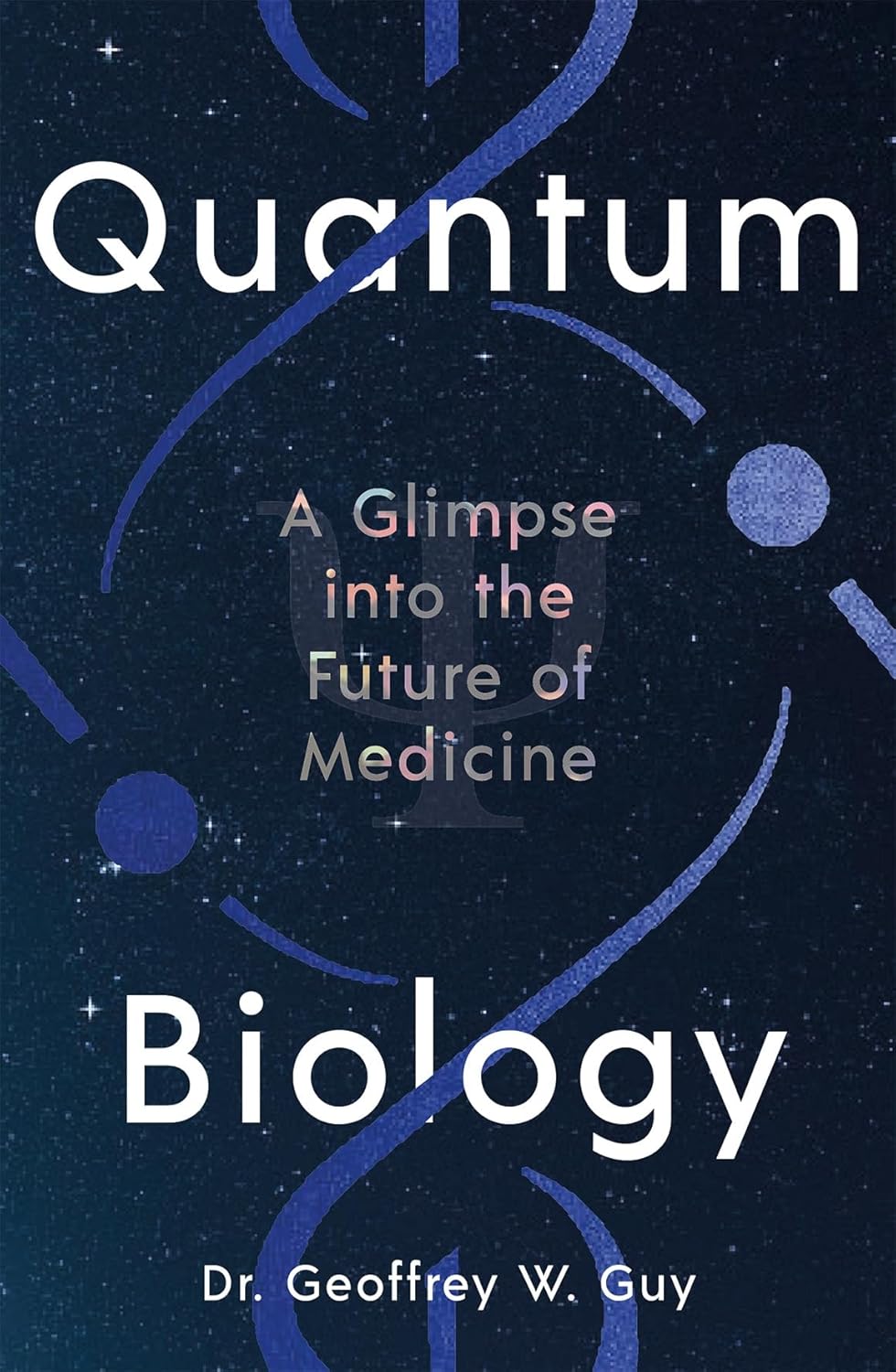
Related Books ▼

Interesting Articles▼
RELATED SOURCES & INFORMATION ▽
DID YOU GET ANY OF THAT?
Read a summarization of this page's content in question-answer format ▽ (click to open and collapse the content)
What is quantum biology, in simple terms?
It studies whether living systems use quantum effects such as coherence or tunneling to perform biological functions.
Why is this field relevant to technology?
If biology can maintain quantum states in noisy environments, those strategies could inform more stable quantum devices and materials.
How could quantum biology influence medicine?
Understanding quantum processes in enzymes or photosynthesis may lead to more efficient drugs and advanced energy-harvesting technologies.
What makes quantum biology scientifically challenging?
Quantum effects are extremely hard to detect in complex, warm biological systems, and many hypotheses still lack experimental confirmation.
Why does quantum biology raise philosophical questions?
It suggests that life and physics are deeply interconnected, blurring the boundary between biological processes and fundamental physical laws.
Related Articles:

mRNA Technology: Beyond the Vaccine Breakthrough
The same molecular messenger that fought COVID-19 is now rewriting the future of medicine, from cancer to heart repair.

Fusion Energy: Power from the Stars
By recreating the reactions that light the sun, scientists are racing to unlock a virtually limitless and clean source of energy on Earth.

Graphene: The Wonder Material Changing Everything
One atom thick yet stronger than steel, graphene is redefining what’s possible in electronics, energy, and materials science.

The Rise of Smart Materials: Matter That Thinks
From shape-shifting alloys to self-healing polymers, new materials are beginning to sense, respond, and adapt — just like living systems.

Solar Windows: Turning Glass Into Power
Transparent solar panels promise a future where every window, wall, and surface can quietly generate clean energy.

Terraforming Mars: Engineering a Second Earth
Scientists and dreamers are exploring how to transform the Red Planet’s frozen deserts into a world where life — and perhaps humanity — could thrive.

Asteroid Mining: The New Frontier of Space Resources
As Earth’s reserves dwindle, scientists and entrepreneurs are looking to the asteroid belt for metals, minerals, and the materials that could fuel the next space age.

Exoplanet Atmospheres: Reading the Skies of Distant Worlds
New telescopes are revealing what alien planets are made of — and whether some might be capable of supporting life.

Biomimicry: Nature-Inspired Innovation
From self-cleaning surfaces to energy-efficient cities, engineers are learning that the smartest designs often already exist in nature.


Tech That Actually Helps.
At Gadgifyr, we focus on one thing — gadgets that truly improve your life. Every product is chosen for its usefulness, quality, and real impact, not marketing claims.
We test, research, and verify what works, translating complex tech into clear insights. So when you read a Gadgifyr review, you know it’s honest, science-backed, and made for real people.
STAY IN THE LOOP
Updates Worth Reading.
Receive clear, honest gadget news — handpicked, tested, and explained. Join a smarter feed for people who want tech that truly matters.
Explore Other Blogs:


Gadgifyr
May 3, 2026
-
9 min
Wearable Health Tracking Demystified: What Your Smartgear Gets Right - and What It Doesn’t
Smartwatches, scales, and rings all promise to decode your body — here's which readings you can actually trust, and which are closer to guesswork.
Category

Gadgifyr
April 3, 2026
-
10 min
Losing Fat, Faster and Smarter: What Actually Works (and What's Next)
The real science behind faster fat loss — from proven diets and exercise to meal prepping and the gadgets worth (and not worth) your money.
Category

Gadgifyr
March 19, 2026
-
8 min
The Science of Getting Things Done: A Practical, Brain-Based Guide to Real Productivity
The real science behind sharper focus — what actually helps your brain concentrate, and which popular focus habits and gadgets don't hold up.
Category
