More Than Just Clean: How Reducing Dust Can Improve Your Well-Being
This review summarizes recent findings on harmful chemicals and heavy metals found in household dust. It highlights the risks to children and adults from everyday exposure, even in well-maintained homes.
What the Science Says
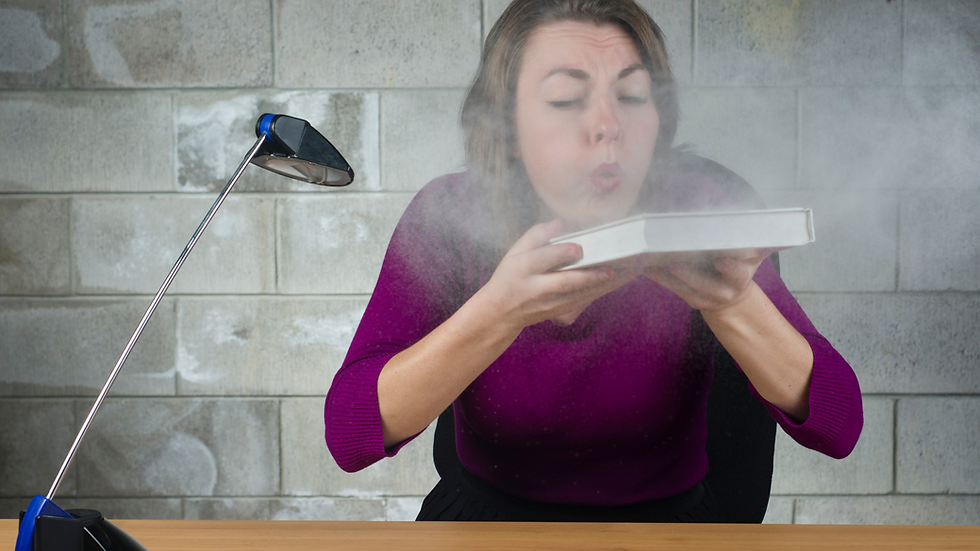
Indoor dust is far more than a simple nuisance - it is a reservoir for harmful substances emitted by consumer products, furnishings, and environmental sources. A series of reviews and meta-analyses has documented the consistent presence of endocrine-disrupting chemicals (EDCs), heavy metals, and industrial additives in household dust, with potential health consequences, especially for children.
Across U.S. homes, phthalates, phenols, flame retardants, and perfluoroalkyl substances (PFAS) were found at measurable concentrations in nearly every sample reviewed, with phthalates topping the list in terms of volume and exposure potential (Mitro et al., 2016).
Estimated residential intakes from dust ingestion, inhalation, and dermal contact indicated that exposure levels for several substances - particularly certain phthalates and flame retardants - were high enough to warrant health concern. Many of these chemicals share hazard traits such as endocrine disruption and reproductive toxicity.

Heavy metals such as lead (Pb), arsenic (As), and chromium (Cr) were also frequently detected in indoor dust samples, particularly in urban and industrial settings (Tan et al., 2016).
While some levels remained below immediate toxicity thresholds, the Hazard Index (HI) for children often exceeded safe limits, with specific concern for non-carcinogenic effects of As and Pb. Children are particularly vulnerable due to their frequent hand-to-mouth behavior and developing bodies, which can amplify the impact of low-level exposures.
More recent data (Zhu et al., 2023) confirm that even banned or phased-out substances like BPA, DEHP, and PFOS are still prevalent in indoor dust. At the same time, newer chemical alternatives such as BPS, BPF, and DBDPE - some of which are also suspected endocrine disruptors- are appearing more frequently.
Despite individual compound levels often falling below reference intake values, the cumulative exposure to multiple EDCs remains under-explored and could pose unrecognized health risks through synergistic effects.
Related Books ▼
Gadgifyr could not find any relatable books about this topic that were not to advanced and/or technical.
-

Real - World Performance
⚙️ Phthalates and flame retardants dominate dust samples, showing the highest exposure potential in homes.
⚙️ Children face elevated health risks, especially in urban environments with legacy pollutants.
⚙️ Banned EDCs remain persistent indoors, despite regulatory action.
⚙️ Newer chemicals replacing older toxicants are increasingly found in higher concentrations.
⚙️ Dust is confirmed as a significant exposure pathway for both legacy and emerging contaminants.
Good to Know
🔍 Cumulative exposure to multiple chemicals is underestimated in current risk assessments.
🔍 Carpets, upholstery, and electronics are major sources of persistent indoor contaminants.
🔍 Children under 6 are especially at risk from dust-borne heavy metals like lead and arsenic.
🔍 Many newer chemical substitutes may be as hazardous as those they replace.
🔍 Urban homes and those near industrial areas show significantly higher dust toxicity.
🔍 Routine cleaning reduces dust levels but does not eliminate chemical residues.
🔍 Inhalation, skin contact, and ingestion are all relevant exposure routes - not just breathing.
🔍 Better public awareness and regulatory monitoring of indoor environments are urgently needed.

Evidence-Based Reliability Score
Multiple systematic reviews and large-scale meta-analyses across international data sets; findings are consistent, quantitatively supported, and policy-relevant.
91%
The Consumer Takeaway
This comprehensive review of indoor dust contamination reveals a persistent and under-recognized source of human chemical exposure. Despite regulatory bans, legacy pollutants such as phthalates, PFAS, and heavy metals remain prevalent, often accompanied by newer but similarly hazardous alternatives. The science clearly demonstrates that children are the most vulnerable population, with measurable health risks from even typical household dust.
These findings underscore the need for improved regulation of household products, greater public education, and more nuanced risk assessments that account for co-exposures and cumulative effects. As indoor environments become more central to daily life, so too must the efforts to safeguard them.

Gadgets Connected to These Scientific Insights
The gadgets below each rely on the science discussed in this article — sometimes directly, sometimes through a clever variation of the same underlying technology.
For the best experience, we recommend reading the summary first. It gives you a quick, clear understanding of how the technology works and helps you decide whether these gadgets match what you’re looking for.
Amount of gadgets related to this article:
11
Explore other Gadget Related Articles:
Health Benefits of Sauna Use: Evidence-Based Insights
Sauna bathing is more than just a wellness trend - emerging evidence links it to improved heart health, immune response, and mental well-being. This review outlines what repeated thermal exposure does to the body and brain, especially in everyday use.
Research Strength
84%

The Effect of Facial Muscle Exercises on Facial Features
New studies suggest that targeted facial exercises can enhance muscle thickness and facial firmness. These noninvasive methods may provide visible improvements in facial tone and contour, especially in middle-aged women.
Research Strength
71%

Flossing vs. Waterjetting: Scientific Comparison for Oral Health
New clinical reviews suggest water flossers outperform traditional dental floss in reducing plaque and gum inflammation. This has key implications for oral hygiene routines, especially in users with braces or limited dexterity.
Research Strength
83%

How Loud Sounds Impact Long-Term Hearing Health
New evidence confirms that manufacturing workers exposed to loud environments face significantly higher risks of permanent hearing loss. This systematic review highlights the urgent need for protective strategies in high-noise industries.
Research Strength
83%

1 / 11


About Gadgifyr
We uncover and review gadgets that genuinely make life better — from boosting focus and energy to improving everyday comfort and wellbeing.
No exaggerations, no empty promises. Just real reviews, grounded research, and practical tech that adds value — not noise.
When a gadget makes bold claims, we test the facts, check the science, and give you the clarity you need to decide with confidence.
Join the Gadgifyr Community
Stay ahead of the curve, together.
Get involved with a community that loves smart gadgets, real reviews, and tech that actually improves life.
Follow Us Online
Daily discoveries, trending tools, behind-the-scenes tests.
Find us on social to catch the latest gadgets and join the conversation.
Subscribe to the Newsletter
No spam. Just smart tech.
Get new reviews, science insights, and hand-picked gadget drops straight to your inbox.
Explore Gadgifyr's Blogs


Gadgifyr
3 October 2025
-
4 min
Wake Up Right: 4 Gadgets That Make Mornings Easier
From sunrise alarms to mug warmers, discover four simple gadgets that turn hectic mornings into smooth starts.
Category

Gadgifyr
30 September 2025
-
5 min
Life with Pets, Made Easier: 4 Gadgets That Truly Make a Difference
Tired of fur, mud, and mess? Discover four smart gadgets that actually make life with pets easier — no gimmicks, just honest performance.
Category

Gadgifyr
19 September 2025
-
3 min
How to Use Gadgifyr’s Gadget Guide: Your Shortcut to Smarter Discovery
Looking for new gadgets that truly deliver? The Gadgifyr Gadget Guide is your map to smarter tech — find, learn, and compare with ease.
Category


