
What Are the Biggest Digital Distractions at Work, and How Can You Stop Them?
Research shows that distractions are not only about notifications and scrolling. Even an unused phone or other digital asset nearby can quietly reduce cognitive capacity, changing how well people think and work.
What the Science Says
Phones, laptops, and connected devices are now built into most workflows, but the same always-available design also creates frequent opportunities for attention to fracture. Research in cognitive psychology and workplace economics increasingly treats distraction as more than “time wasted” on a screen. It can show up as reduced working memory, weaker reasoning on demanding tasks, and a higher tendency to drift toward irrelevant cues—effects that matter most when work requires sustained mental effort, problem solving, and complex decision-making.
One of the clearest demonstrations comes from Ward, Duke, Gneezy, and Bos’s “brain drain” experiments on smartphone presence. Across two lab studies with university participants, simply having one’s own smartphone present reduced available cognitive capacity, even when people were not using it and did not report thinking about it.
The researchers manipulated salience by placing phones on the desk (high salience), in a pocket/bag (medium), or in another room (low). Performance improved as phones became less salient, with a significant linear trend: as smartphone salience increased, available working memory capacity and fluid intelligence decreased. In a follow-up experiment, turning phones fully off (vs. on and silenced) did not remove the effect, supporting the idea that the cost is not just about incoming notifications.

Importantly, the effect was strongest among participants higher in smartphone dependence: those who felt they “needed” their phone most showed the biggest cognitive penalty when it was nearby. Meanwhile, a separate line of evidence links distraction to broader information-processing habits: Ophir, Nass, and Wagner found that heavy media multitaskers were more susceptible to interference from irrelevant stimuli and performed worse on a task-switching measure, consistent with reduced filtering of distractions.
Workplace research complements the lab picture by testing what happens when phone access is restricted during routine labor. Chadi, Mechtel, and Mertins ran a field experiment during a nationwide telephone survey and randomly imposed smartphone-use bans for interviewers working alone. They observed substantial increases in effort under bans, and they did not find evidence that bans triggered negative reactions tied to perceived employer distrust.
However, higher effort did not automatically translate into clear economic benefits, because the number of completed interviews did not necessarily rise in step with effort. This aligns with a practical takeaway from the cognitive studies: removing distraction can improve mental capacity and task engagement, but output gains depend on whether the job’s bottleneck is attention, skill, process design, or constraints outside the worker’s control.
Across contexts, the science in these sources points to a consistent hierarchy of solutions. Turning the phone face down or powering it off is not reliably sufficient when the device remains nearby and salient. The most supported intervention is planned separation—creating defined periods where the phone is physically removed (for example, placed in another room).
In education research, a systematic review by Martin, Long, Haywood, and Xie also emphasizes a multi-factor model: distractions arise from technology factors, personal needs, and the environment, and prevention strategies span environment rules, technology controls, and behavioral interventions—with no single lever working everywhere.
Related Books ▼

Real - World Performance
⚙️ Best-supported single move: physical separation. In lab work, moving the phone to another room produced the highest cognitive-capacity performance.
⚙️ Powering off isn’t a guaranteed fix. The cognitive penalty persisted even when phones were turned off, if still nearby.
⚙️ Bans can raise effort, but results depend on the job. Workplace restrictions increased effort in routine calling, without necessarily increasing completed interviews.
⚙️ High-dependence users benefit most from distance. The “brain drain” effect was strongest for people more dependent on smartphones.
Good to Know
🔍 “No distraction” is not the same as “no phone use.” The phone can reduce available working memory even when untouched.
🔍 Self-awareness is unreliable here. Many participants believed phone location did not affect performance, despite measurable differences.
🔍 Dependence matters more than “liking” the phone. In the lab work, dependence moderated effects, while emotional attachment did not.
🔍 Multitasking habits can change what feels distracting. Heavy media multitaskers show higher susceptibility to interference from irrelevant cues.
🔍 Work output may not rise linearly with attention. Effort can increase without proportional productivity gains if other constraints dominate.
🔍 Top distraction sources are often “technology-shaped.” In the education review, technology distractors were the largest category (51.95%).
🔍 Prevention is multi-layered. Policies, device controls, and personal routines each accounted for meaningful shares of prevention strategies in the review.

Evidence-Based Reliability Score
The evidence includes large controlled experiments on cognitive capacity, a real-world field experiment, and a systematic review.
84%
The Consumer Takeaway
Distraction is not framed as a moral failure or a simple lack of willpower. It is treated as a measurable pressure on cognitive systems with limited capacity. The strongest experimental evidence shows that a smartphone can impose a cognitive cost through mere presence, reducing working memory and reasoning performance even when the device is silent and unused. This matters because many high-value tasks—analysis, writing, design, planning—depend on those same resources.
Individual differences also matter; people most dependent on their phones appear to gain the most from separation, suggesting that “one size fits all” advice will miss the largest effects in the people who need help most. Taken together, the research supports structured, intentional distance—not just silencing—as a grounded design principle for future gadgets and work environments built around sustained focus.
Chadi, A., Mechtel, M., & Mertins, V. (2021). Smartphone bans and workplace performance. Experimental Economics, 25(2). https://doi.org/10.1007/s10683-021-09715-w
Duke, É., & Montag, C. (2017). Smartphone addiction, daily interruptions and self-reported productivity. Addictive Behaviors Reports, 6, 90–95. https://doi.org/10.1016/j.abrep.2017.07.002
Martin, F., Long, S., Haywood, K., & Xie, K. (2025). Digital distractions in education: A systematic review of research on causes, consequences and prevention strategies. Educational Technology Research and Development, 73(6). https://doi.org/10.1007/s11423-025-10550-6
Ophir, E., Nass, C., & Wagner, A. D. (2009). Cognitive control in media multitaskers. Proceedings of the National Academy of Sciences, 106(37), 15583–15587. https://doi.org/10.1073/pnas.0903620106
Ward, A. F., Duke, K., Gneezy, A., & Bos, M. W. (2017). Brain drain: The mere presence of one’s own smartphone reduces available cognitive capacity. Journal of the Association for Consumer Research.
DID YOU GET ANY OF THAT?
Read a summarization of this page's content in question-answer format ▽ (click to open and collapse the content)
What does “mere presence” actually mean in these studies?
It means the phone is physically nearby but not being used—no checking, no interaction. The key finding is that proximity and salience alone can reduce cognitive capacity on demanding tasks.
Why doesn’t turning a phone off reliably solve the problem?
In the lab experiment, powering phones off did not remove the performance drop when phones stayed nearby. The results support the idea that attention resources are still recruited when the device remains salient.
Which people are most likely to benefit from putting the phone away?
The evidence points most strongly to people with higher smartphone dependence. For them, separation produced the largest improvement in available working memory performance.
Are smartphones the only major distraction category?
No. In the education review, technology distractors were the largest category, but personal needs and the instructional environment also contributed. This implies effective prevention usually combines rules, tools, and habits.
Do phone bans always increase productivity at work?
Not necessarily. A field experiment found increased effort under bans, but output (completed interviews) did not consistently rise in parallel, showing that productivity depends on what actually constrains results in that job.
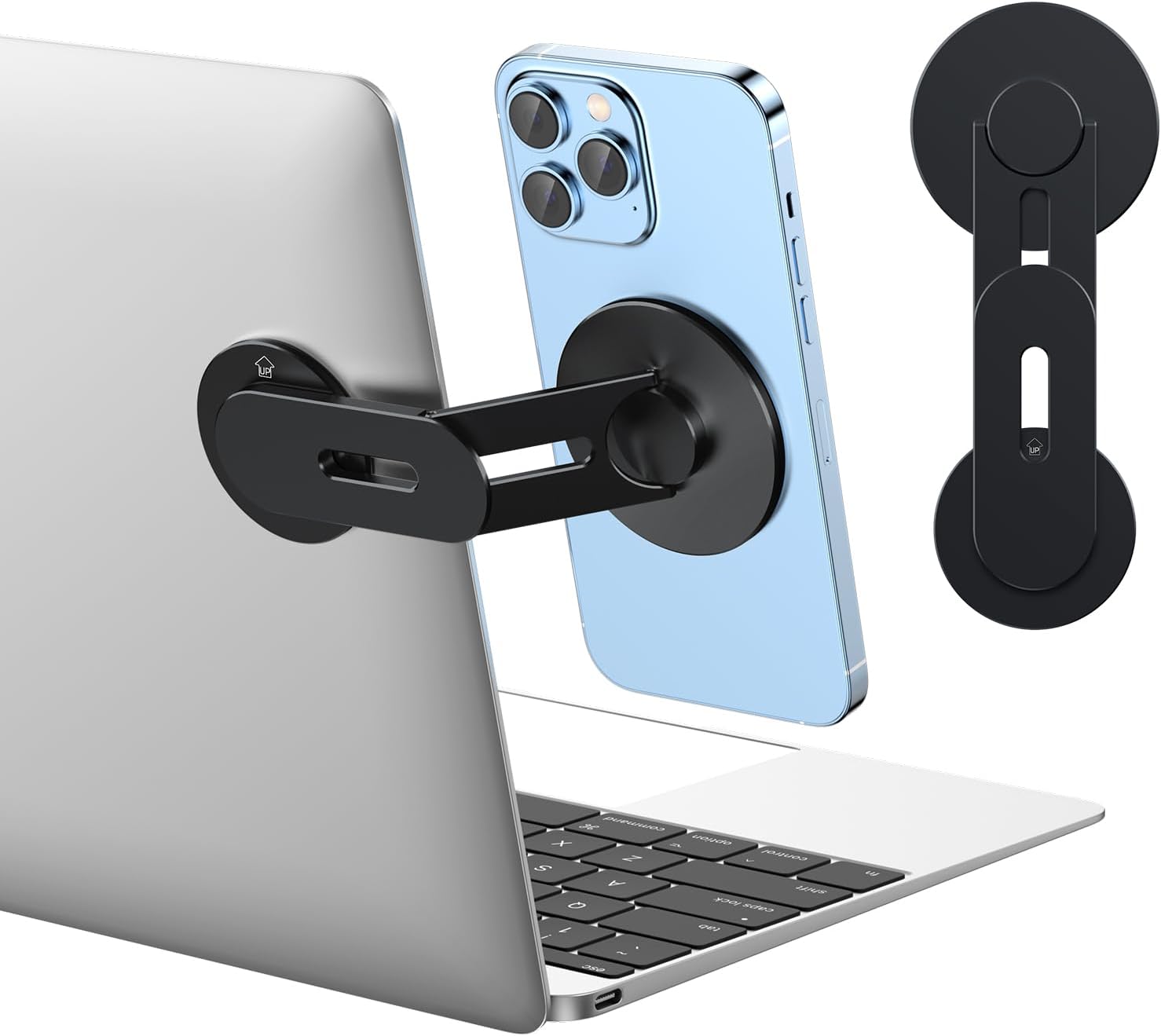
Gadgets Connected to These Scientific Insights
The gadgets shown here each rely on the science discussed in this article — sometimes directly, sometimes through a clever variation of the same underlying technology.
For the best experience, we recommend reading the summary first. It gives you a quick, clear understanding of how the technology works and helps you decide whether these gadgets match what you’re looking for.

Explore other Gadget Related Articles:

Do Alexa, Siri, and Digital Agendas Actually Help You Get More Done/Stay Organized?
Voice assistants can reduce “mental load” by capturing tasks hands-free, but privacy trade-offs and over-reliance are real, and productivity gains depend more on how they’re used than on the device itself.

Can Fixing Your Posture Prevent Long-Term Back and Joint Pain?
An evidence-based look at the consequences of bad posture, the importance of correcting it early, and which correction methods are proven to work.

Do Calming Sounds Actually Help You Focus?
Silence can be best for complex thinking, but gentle background sounds—especially nature sounds—can help attention and stress in some people and tasks.

1 / 5


About Gadgifyr
We uncover and review gadgets that genuinely make life better — from boosting focus and energy to improving everyday comfort and wellbeing.
No exaggerations, no empty promises. Just real reviews, grounded research, and practical tech that adds value — not noise.
When a gadget makes bold claims, we test the facts, check the science, and give you the clarity you need to decide with confidence.
Join the Gadgifyr Community
Stay ahead of the curve, together.
Get involved with a community that loves smart gadgets, real reviews, and tech that actually improves life.
Subscribe to the Newsletter
No spam. Just smart tech.
Get new reviews, science insights, and hand-picked gadget drops straight to your inbox.
Explore Gadgifyr's Blogs


Gadgifyr
January 2, 2026
-
4 min
For the Organized Home Chef: 4 Smart Food Storage Upgrades
Want a calmer, smarter kitchen? Four honest picks that improve prep, storage, and everyday cooking—no gimmicks.
Category

Gadgifyr
December 10, 2025
-
4 min
Why Exercise Really Works: What Science Says About Its Power Over Body and Mind
From immune defense to mental health and cholesterol balance — discover what the latest research says about how exercise really works.
Category

Gadgifyr
December 26, 2025
-
4 min
Wake Up Right: 4 Gadgets That Make Mornings Easier
From sunrise alarms to mug warmers, discover four simple gadgets that turn hectic mornings into smooth starts.
Category


