The Science of Flow States: The Mind in Full Motion
How focus, challenge, and chemistry converge to create our most productive mental state.
Explained
Key Takeaways
Flow is a state of deep focus where challenge and skill align perfectly.
It involves reduced self-awareness and heightened neurochemical activity.
Dopamine and endorphins enhance motivation and creativity during flow.
Clear goals, feedback, and uninterrupted time help trigger the state.
Flow increases performance, learning, and intrinsic satisfaction.
Good to Know
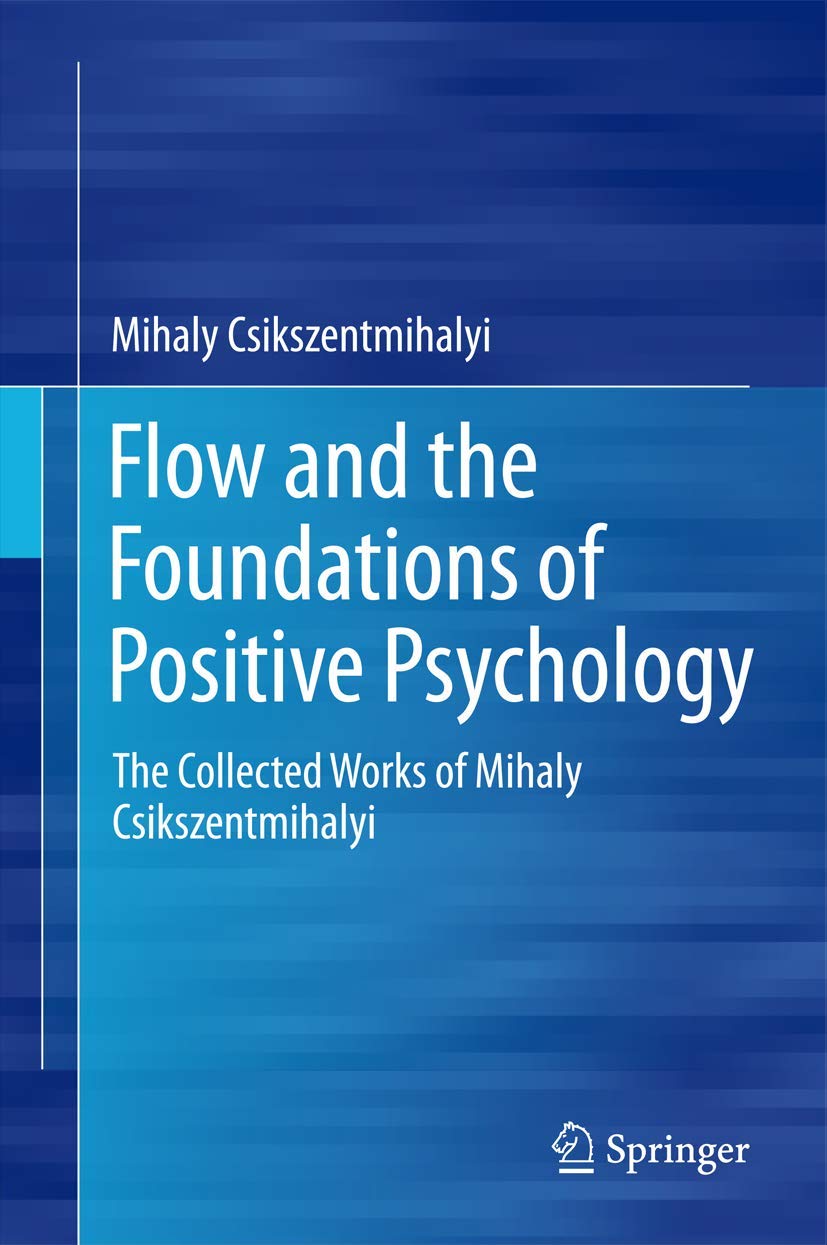
Psychologist Mihály Csíkszentmihályi coined the term “flow” in 1975.
The brain’s prefrontal cortex quiets during flow, enhancing immersion.
Extreme sports athletes and artists often enter flow spontaneously.
Too much stimulation or multitasking prevents the state from forming.
Flow represents optimal consciousness, not mere productivity.
There are moments when time disappears, distractions fade, and everything seems to move effortlessly — a state athletes call being “in the zone,” musicians call “losing themselves,” and psychologists call flow. First described in detail by Mihály Csíkszentmihályi in the 1970s, the flow state is a condition of deep, enjoyable concentration where performance peaks and self-consciousness dissolves.
Csíkszentmihályi’s research began with artists who would paint for hours without noticing hunger or fatigue. He saw this as a universal psychological phenomenon — one where the mind balances challenge and skill so perfectly that attention becomes total. Flow isn’t about relaxation; it’s about complete engagement. The sweet spot lies between boredom and anxiety — tasks too easy lead to apathy, too hard to frustration. When the balance is right, the brain locks into rhythm, and work feels intrinsically rewarding.
Neuroscience has since revealed what happens beneath that seamless experience. During flow, activity in the prefrontal cortex temporarily quiets, a process known as transient hypofrontality. This “mental silence” reduces self-criticism and time awareness, allowing intuition and action to merge. Meanwhile, the brain releases a cocktail of neurochemicals — dopamine, norepinephrine, anandamide, and endorphins — that enhance focus, creativity, and motivation. Together, they produce a neurobiological signature of effortless effort.
Flow can arise in sports, coding, surgery, gaming, or even conversation. It thrives in environments that provide clear goals, immediate feedback, and a sense of progress. When people experience it, productivity can increase severalfold, and learning accelerates because the brain’s reward system reinforces the task itself. In essence, flow is not just a feeling — it’s an optimized mode of consciousness shaped by attention and chemistry.

Today, scientists and organizations are asking how to intentionally trigger flow — not as a rare accident, but as a repeatable skill. Research at institutions like Stanford’s Flow Research Collective and Imperial College London explores how environment, technology, and neurofeedback can help individuals reach this state on demand. Virtual reality simulations, adaptive learning systems, and even wearable EEG devices are being designed to nudge the brain toward flow-like patterns.
In workplaces, leaders are rethinking productivity metrics through this lens. Rather than multitasking and constant alerts, companies now experiment with “deep work” design — uninterrupted time, clear goals, and task autonomy. These conditions echo Csíkszentmihályi’s principles, proving that human performance often depends more on psychology than policy.
Yet the pursuit of flow raises questions. Can it be overused — turning engagement into addiction, especially in gaming or social media? And can the constant optimization of focus leave little room for rest or reflection? Researchers emphasize that flow is not meant to replace balance, but to enrich it — a rhythm between intensity and recovery.
If harnessed wisely, understanding flow could transform education, mental health, and even therapy. It may help people rediscover joy in work, creativity in problem-solving, and calm amid complexity — not through escape, but through total presence.
December 6, 2025

Final Thoughts
Flow reveals a rare harmony between mind and action — a state where doing and being become one. It reminds us that peak performance isn’t about control, but surrender: letting focus carry us instead of forcing it.
In a distracted age, rediscovering flow is both a scientific and spiritual pursuit — a return to what the human brain does best when it’s fully alive to the moment. The science of flow is, in many ways, the science of meaning itself — showing how deep engagement turns ordinary moments into experiences of genuine fulfillment.
Related Books ▼


Interesting Articles▼
RELATED SOURCES & INFORMATION ▽
DID YOU GET ANY OF THAT?
Read a summarization of this page's content in question-answer format ▽ (click to open and collapse the content)
What does it mean to “intentionally trigger” flow rather than waiting for it to happen?
It means designing environments, tools, and routines that reliably create the conditions for deep focus and engagement. Research in neurofeedback, VR, and adaptive systems aims to make flow a skill that can be practiced and accessed on demand.
How are technology and neuroscience being used to support flow states?
Virtual reality, wearable EEG devices, and adaptive learning platforms are being developed to guide attention, reduce distraction, and align tasks with cognitive readiness. These tools subtly nudge the brain toward the patterns associated with sustained focus and optimal performance.
Why are modern workplaces rethinking productivity through the lens of flow?
Because multitasking and constant interruptions undermine deep work. By prioritizing clear goals, autonomy, and uninterrupted time, organizations are recreating the psychological conditions shown to enhance creativity, efficiency, and job satisfaction.
What risks come with optimizing for flow too aggressively?
Overuse can blur the line between healthy engagement and compulsive behavior, particularly in digital environments like gaming or social media. There is also concern that relentless focus may crowd out rest, reflection, and emotional balance.
Related Articles:

The Placebo Effect: Power of Belief in Medicine
How the mind’s expectation can trigger real healing — and reshape modern medicine.

Sleep and Memory: The Brain’s Night Shift
How your sleeping brain sorts, strengthens, and safeguards everything you learn each day.

Neuroplasticity: The Brain That Rebuilds Itself
How experience, learning, and recovery reveal the brain’s lifelong power to adapt and change.

The Power of Habit: How Behavior Becomes Biology
Inside the science of repetition, reward, and the neural loops that shape our daily lives.

The Gut-Brain Connection: How the Mind and Microbes Communicate
Emerging science reveals how the digestive system and brain engage in a constant biochemical dialogue that shapes our mood, memory, and health.

Quantum Computing: Thinking in Qubits, Not Bits
A new kind of computer harnesses the strange rules of quantum physics to solve problems that stump even the fastest classical machines.

The Science of Smell and Memory: The Scent of Remembering
Neuroscience is uncovering why a single whiff of perfume or rain can instantly transport us to another time and place.

The Mathematics of Chaos: Finding Order in Disorder
From weather patterns to the beating of the heart, chaos theory reveals that unpredictability is not the absence of order — but a deeper kind of structure.


Tech That Actually Helps.
At Gadgifyr, we focus on one thing — gadgets that truly improve your life. Every product is chosen for its usefulness, quality, and real impact, not marketing claims.
We test, research, and verify what works, translating complex tech into clear insights. So when you read a Gadgifyr review, you know it’s honest, science-backed, and made for real people.
STAY IN THE LOOP
Updates Worth Reading.
Receive clear, honest gadget news — handpicked, tested, and explained. Join a smarter feed for people who want tech that truly matters.
Explore Other Blogs:


Gadgifyr
January 10, 2026
-
11 min
Science-Backed Skin Tech: What Really Works and What Still Needs Proof
LED masks, infrared saunas, microcurrent devices, and daily habits all promise glowing, youthful skin — here's what the science actually confirms and what's still unproven.
Category

Gadgifyr
December 30, 2025
-
4 min
How to Use Gadgifyr’s Gadget Guide: Your Shortcut to Smarter Discovery
The Gadget Guide is not just a list — it is a structured, honest map through modern technology. Here is how to use it well.
Category

Gadgifyr
December 16, 2025
-
5 min
The Science Behind the Gadgets: How Gadgifyr Tests What Really Works
Curious how Gadgifyr separates real science from clever marketing? Here is the process behind every evidence-checked review on the platform.
Category
