Vertical Farming: The Next Green Revolution
Stacking crops instead of spreading fields, this urban farming technology reimagines how the world feeds itself.
New Tech
Possible Implications for Humanity
Provides local, year-round food production with minimal land use.
Reduces transportation emissions and food waste in urban supply chains.
Creates jobs in urban agri-tech, robotics, and data-driven farming.
Enables agriculture in regions with poor soil or limited water.
Could improve global food security under climate stress.
Risks or Challenges
High energy consumption, especially from artificial lighting.
Limited crop diversity and difficulty scaling beyond leafy greens.
Significant capital costs and maintenance requirements.
Reliance on consistent electricity and high-tech infrastructure.
Risk of widening inequality between tech-enabled and traditional farmers.
For most of human history, agriculture has expanded outward — more land, more irrigation, more distance between people and their food. But in the 21st century, that model has reached its limits. Arable land is shrinking, cities are swelling, and climate volatility is disrupting harvests. Into this tension has risen a bold alternative: vertical farming — the science of growing crops in stacked layers, often indoors, under precisely controlled conditions.
The concept was first proposed in the late 1990s by ecologist Dr. Dickson Despommier at Columbia University, who envisioned skyscrapers filled with crops feeding dense urban populations. What began as a thought experiment soon turned practical with advances in LED lighting, hydroponics, and automation. Instead of relying on soil and sunlight, vertical farms use nutrient-enriched water and artificial light tuned to photosynthetic wavelengths, giving plants exactly what they need — no more, no less.
At the heart of the system lies controlled-environment agriculture (CEA). Sensors regulate temperature, humidity, CO₂ levels, and nutrient balance, creating an optimized microclimate for growth. The result is astonishing efficiency: yields per square meter can be 10 to 20 times higher than traditional fields, while water use drops by up to 90%. And because crops grow indoors, they’re shielded from pests, droughts, and seasonal constraints, making farming possible anywhere, anytime — from city centers to deserts to space stations.
The first commercial vertical farms appeared in Japan and the United States in the early 2010s, producing lettuce, herbs, and strawberries for local markets. Since then, the field has grown rapidly, blending agriculture, engineering, and data science into a new kind of urban infrastructure — one where farming rises toward the sky instead of spreading across the earth.

Vertical farming could fundamentally reshape how societies produce and distribute food. By localizing production, it reduces transportation emissions and food spoilage, while ensuring consistent supply even during crises. Urban centers may one day integrate farms directly into residential towers, warehouses, and retail spaces, providing fresh greens within walking distance of consumers.
Technological innovation continues to push the boundaries. AI-driven growth algorithms now adjust lighting and nutrients based on real-time data from each plant. Robotics handle seeding, harvesting, and packaging, while renewable energy sources help offset the electricity demand of lighting and climate control. Some experimental systems combine aquaponics — raising fish whose waste feeds the plants — to create closed nutrient loops.
Yet, challenges remain. High startup costs, energy consumption, and limited crop diversity still constrain profitability. Leafy greens dominate because they grow quickly and require less light, but scaling up to grains or fruits remains difficult. Critics argue that vertical farming should complement, not replace, traditional agriculture — feeding cities while rural lands focus on staples and biodiversity.
Still, the potential is profound. As the global population approaches ten billion, vertical farming offers a resilient, climate-proof, and land-efficient food source. If powered by renewables and optimized through smart design, it could mark a turning point in humanity’s long relationship with the soil — one where growth no longer depends on geography, but on ingenuity.
December 26, 2025

Final Thoughts
Vertical farming captures the essence of modern sustainability: doing more with less, without exhausting the earth that sustains us. It transforms farming from a battle against nature’s limits into a collaboration with technology’s precision.
In the long view, this revolution is about more than stacked crops or glowing LEDs. It represents a shift in mindset — from extraction to regeneration, from rural dependency to urban resilience. As cities grow upward and climates grow uncertain, the farms of the future may bloom not in fields, but in light-filled towers — silent forests feeding the world from within.
Related Books ▼
Urban Agriculture: Indoor Vertical Farms, Smart Food Systems, and the Future of Food
Muhammad Sultan & colleagues

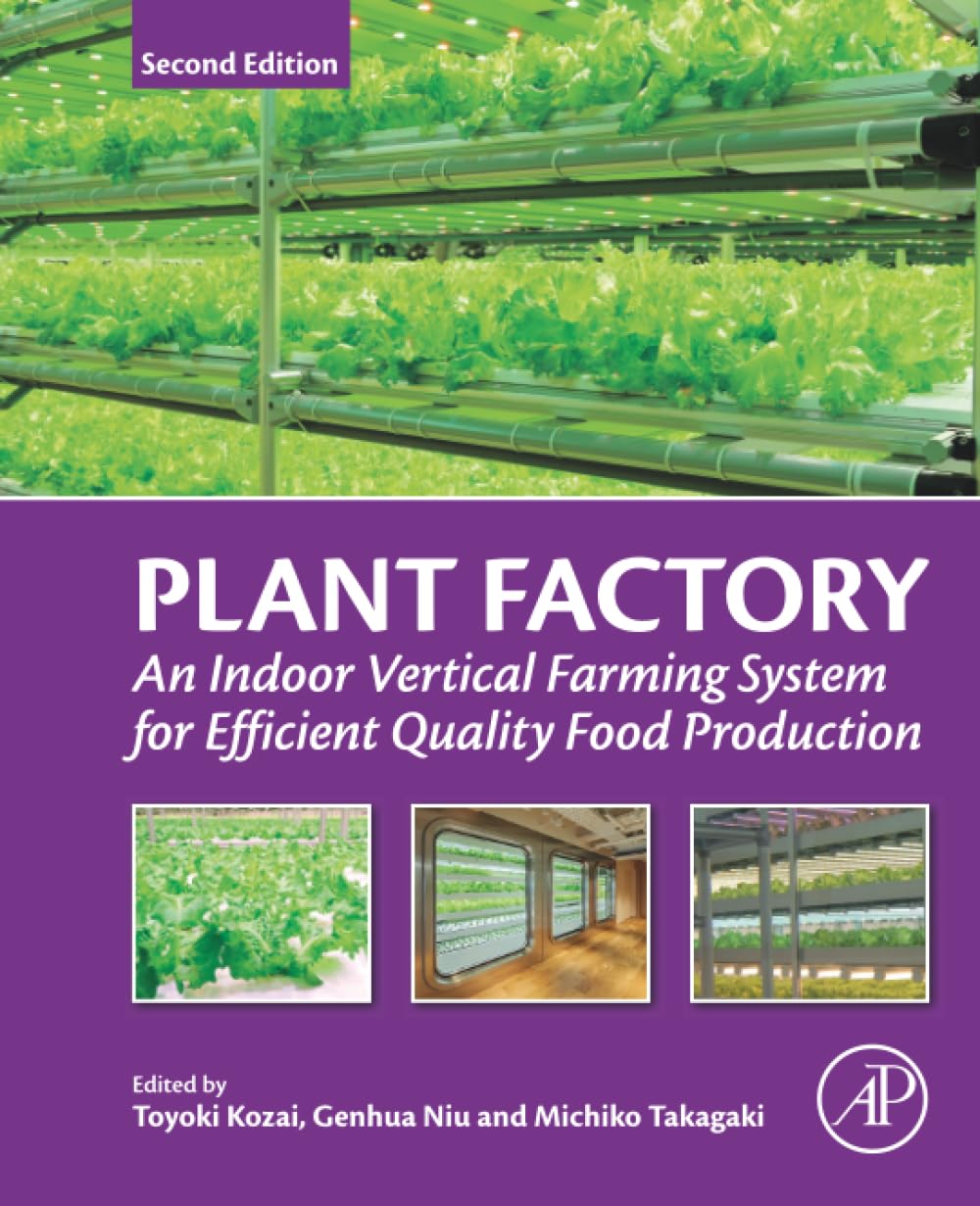
Plant Factory: An Indoor Vertical Farming System for Efficient Quality Food Production
Edited by Toyoki Kozai, Genhua Niu & Michiko Takagaki

Interesting Articles▼
What Is Vertical Farming? Everything You Should Know About This Innovation
The article explains how vertical farming could revolutionize agriculture by producing more food with less land and environmental damage. It highlights the urgent need for sustainable farming methods as global populations grow and traditional agriculture degrades the planet.
RELATED SOURCES & INFORMATION ▽
DID YOU GET ANY OF THAT?
Read a summarization of this page's content in question-answer format ▽ (click to open and collapse the content)
How does vertical farming change the geography of food production?
By relocating agriculture into cities, it shortens supply chains and reduces emissions from transport and storage. This proximity also limits spoilage and increases resilience during disruptions to traditional distribution networks.
What role does automation play in making vertical farms viable?
AI systems optimize light, water, and nutrients at the level of individual plants, improving efficiency and consistency. Robotics further reduce labor costs by automating planting, harvesting, and packaging.
Why are leafy greens currently the dominant crops in vertical farms?
They grow quickly, tolerate dense stacking, and require less light than larger or longer-cycle crops. Grains and fruiting plants demand more space, energy, and time, making them harder to scale economically indoors.
What are the main constraints on large-scale adoption?
High upfront investment, ongoing energy needs, and limited crop diversity restrict profitability. Even with renewables and efficiency gains, these systems must compete with low-cost, open-field agriculture.
Why do many experts see vertical farming as a complement rather than a replacement?
Because it is best suited to urban food security and high-value produce, while rural agriculture remains essential for staples and ecological stewardship. Together, the two models can balance efficiency, resilience, and biodiversity.
Related Articles:

Neuralink: When the Brain Becomes an Interface
A brain–computer interface aiming to connect human thought with machines

Artificial Photosynthesis: Mimicking Nature’s Power Plant
A new generation of solar chemistry aims to turn sunlight, water, and CO₂ into clean fuel.

Emotional Intelligence in the Age of AI
As machines learn to think, humanity’s true edge may lie in how we feel, not how we compute.

Ocean Carbon Capture: Turning the Seas into Our Climate Ally
How new ocean-based strategies aim to lock away CO₂ — and what stands between ambition and effective deployment.

Biodegradable Electronics: Tech That Disappears by Design
From dissolving sensors to compostable circuits, a new generation of electronics aims to leave no trace behind.

Microbial Fuel Cells: Power from Living Microbes
How bacteria that eat waste are quietly redefining the future of clean, self-sustaining energy.

Synthetic Trees: Engineering the Future of Clean Air
How artificial “trees” that capture carbon faster than forests could help humanity breathe easier.

CRISPR: Rewriting the Code of Life
How a bacterial defense system became the world’s most powerful tool for editing genes — and shaping the future of biology.

Stem Cell Regeneration: Rebuilding the Body from Within
How the body’s master cells are unlocking new frontiers in healing, repair, and human longevity.


Tech That Actually Helps.
At Gadgifyr, we focus on one thing — gadgets that truly improve your life. Every product is chosen for its usefulness, quality, and real impact, not marketing claims.
We test, research, and verify what works, translating complex tech into clear insights. So when you read a Gadgifyr review, you know it’s honest, science-backed, and made for real people.
STAY IN THE LOOP
Updates Worth Reading.
Receive clear, honest gadget news — handpicked, tested, and explained. Join a smarter feed for people who want tech that truly matters.
Explore Other Blogs:


Gadgifyr
January 12, 2026
-
15 min read
Hair Loss Myths That Are Wasting Your Money (and What Actually Works)
A science-based look at what actually works for hair loss — from minoxidil and microneedling to natural oils, DHT-blocking shampoos, and biotin — and what's mostly marketing.
Category

Gadgifyr
January 6, 2026
-
10 min read
The Science of Falling Asleep: What Actually Helps, From Warm Baths to Weighted Blankets
A science-backed breakdown of how sleep actually works and which popular sleep aids, from weighted blankets to sound machines, genuinely help.
Category

Gadgifyr
April 18, 2026
-
11 min
Clean Mouth, Clear Science: What Actually Improves Oral Hygiene
The real evidence behind brushing, flossing, mouthwash, and bad breath — and which habits are actually worth building into your routine.
Category
