
Can Meal Prepping Improve Healthy Eating Habits Long Term?
Meal prep is often sold as a “perfect diet hack,” yet the real benefit is simpler: planning and cooking ahead reduces last-minute decisions that push people toward convenience foods. Research links meal planning and home-cooked meals with better diet quality, and practical food-safety rules help keep prepping from turning into spoiled food.

Gadgifyr
January 22, 2026
6 min
Real - World Performance
⚙️ Meal planning is linked with better diet quality and more food variety, which makes nutrient coverage easier over time.
⚙️ Home-cooked meals are associated with healthier dietary patterns (DASH/Mediterranean-style) and higher fruit/veg intake.
⚙️ A structured meal-prep program can raise cooking confidence and the share of home-cooked meals, which supports healthier routines.
⚙️ Consistent meal planning (not just “on and off”) is associated with better weight-loss outcomes in a behavioral program.
⚙️ Best safety practice is a 3–4 day fridge horizon for cooked meals; freeze extra portions to extend storage safely.
⚙️ Prepping works best when it reduces “decision fatigue”: repeatable breakfasts/lunches can protect dinner choices from stress.
⚙️ Portioning meals into individual containers can support steadier intake, but only if portions match hunger and energy needs.
Good to Know
🔍 Meal planning is associated with better diet quality and higher food variety in a very large adult sample.
🔍 Frequent home-cooked meals are linked to higher fruit and vegetable intake and healthier eating pattern scores.
🔍 Meal prep does not guarantee better health markers across the board; some cardio-metabolic measures showed no significant adjusted links in one cohort.
🔍 A meal-prep program improved cooking self-efficacy, which matters because confidence often predicts follow-through.
🔍 The “prep everything for 7 days in the fridge” idea is risky—cooked leftovers are commonly recommended within 3–4 days refrigerated.
🔍 Freezing helps: frozen leftovers can stay safe longer, though quality can decline over time.
🔍 Meal prep can backfire if meals are too repetitive—variety is part of what meal planners scored higher on in research.
🔍 “Meal prep = weight loss” is overhyped; planning is a tool that supports healthier choices, but total intake and food quality still matter.
Meal prepping helps some people eat healthier because it changes the decision moment. When meals are planned and ready, the easiest option is often the healthier one, and there is less reliance on impulse choices when time is short. In a large French sample (40,554 adults), people who reported meal planning (planning ahead what will be eaten in the next few days) were more likely to have higher diet quality scores and higher food variety, and they also showed lower odds of obesity (and lower odds of overweight in women).
Importantly, this study was cross-sectional, meaning it shows association, not proof that planning caused the better outcomes—but it supports meal planning as a useful behavioral lever.
A second line of evidence comes from home-cooking frequency. In a UK cohort (11,396 adults), eating home-cooked main meals more often was associated with greater adherence to DASH and Mediterranean-style eating patterns, higher fruit and vegetable intake, and higher plasma vitamin C. People eating home-cooked meals more than five times per week were also less likely to have overweight BMI and excess body fat, while links to HbA1c, cholesterol, and hypertension were not significant after adjustment.
Together, these findings suggest meal prep can help most when it increases the share of meals eaten at home and improves what those meals contain (vegetables, whole grains, lean proteins), rather than simply “batch cooking anything.”
Intervention data is smaller but still instructive. A pilot program focused on advance quantity meal preparation (AQMP) had participants prepare and portion meals weekly for six weeks and found increases in home-cooked meal consumption, plus improvements in cooking attitudes and cooking self-efficacy, with some changes persisting at three months.
A weight-loss program study also found that higher average meal-planning frequency predicted greater weight loss outcomes, suggesting planning works best as a consistent habit rather than an occasional push.
The biggest hidden risk is food safety and food waste. “Prep for the whole week and keep it in the fridge” is often overstated—official guidance commonly recommends using cooked leftovers within 3–4 days when refrigerated, and freezing for longer storage.
That means many people do better with a 3–4 day prep window, a “prep twice weekly” routine, or freezing extra portions immediately to reduce spoilage and illness risk.

KEY STATISTICS


EVIDENCE-BASED RELIABILITY
71%
Overall Score
Sources Used
Claim Types
Long-term Studies
Large observational studies are consistent, with smaller interventions suggesting behavior change, but causality is still limited.
AT A GLANCE - METRIC ACCURACY
The Consumer Takeaway
Meal prepping can help people eat healthier when it functions as a practical planning system rather than a lifestyle badge. Large population studies link meal planning and frequent home-cooked meals with better overall diet quality, more food variety, and lower likelihood of overweight or excess body fat in adjusted analyses. A smaller pilot program suggests that learning to prep meals in bulk can improve cooking confidence and increase the share of meals eaten at home, which is a realistic pathway toward better eating habits. Another study inside a weight-loss program found that steadier meal planning across time aligned with better weight outcomes, hinting that consistency matters more than intensity.
The most important overlooked fact is safety: prepping a full week of cooked food and storing it only in the fridge is often not a good idea. A 3–4 day refrigerator window plus freezing extra portions protects both health and food quality. In the end, meal prep works best as behavior design: making the healthy choice easier, faster, and more automatic—exactly the kind of thinking that shapes better tools, kitchens, and future food-tech habits.
Ducrot, P., Méjean, C., Aroumougame, V., Ibanez, G., Allès, B., Kesse-Guyot, E., Hercberg, S., & Péneau, S. (2017). Meal planning is associated with food variety, diet quality and body weight status in a large sample of French adults. International Journal of Behavioral Nutrition and Physical Activity, 14(1), 12. https://doi.org/10.1186/s12966-017-0461-7
Mills, S. D. H., Brown, H., Wrieden, W. L., White, M., & Adams, J. (2017). Frequency of eating home cooked meals and potential benefits for diet and health: Cross-sectional analysis of a population-based cohort study. International Journal of Behavioral Nutrition and Physical Activity, 14(1). https://doi.org/10.1186/s12966-017-0567-y
Hayes, J. F., Balantekin, K. N., Fitzsimmons-Craft, E. E., Jackson, J. J., Ridolfi, D. R., Boeger, H. S., Welch, R. R., & Wilfley, D. E. (2021). Greater average meal planning frequency predicts greater weight loss outcomes in a worksite-based behavioral weight loss program. Annals of Behavioral Medicine, 55(1), 14–23. https://doi.org/10.1093/abm/kaaa021
Mendez, S., Kubota, J., Widaman, A. M., & Gieng, J. (2021). Advance quantity meal preparation pilot program improves home-cooked meal consumption, cooking attitudes, and self-efficacy. Journal of Nutrition Education and Behavior, 53(7), 608–613. https://doi.org/10.1016/j.jneb.2020.12.014
DID YOU GET ANY OF THAT?
Read a summarization of this page's content in question-answer format ▽ (click to open and collapse the content)
How does meal prep actually lead to healthier eating?
It lowers the number of “high-pressure” food decisions by making a planned meal the fastest option. Studies link meal planning and home cooking with better diet quality patterns and higher fruit/vegetable intake.
Is there proof that meal prep causes weight loss?
Most evidence here is observational, meaning it cannot prove cause and effect. However, in a behavioral weight-loss program, higher average meal-planning frequency predicted greater weight loss, suggesting planning can support results.
How long should prepped meals stay in the fridge?
A common safety guideline is to use cooked leftovers within 3–4 days in the refrigerator. For longer storage, freezing portions early is safer and reduces waste.
What are the biggest downsides of meal prepping?
Food waste and food safety issues are common if too much is cooked and stored too long. Some people also get “menu fatigue,” which can trigger takeout rebound if meals feel repetitive.
What’s a realistic best-practice routine?
A 3–4 day prep window with a midweek refresh is practical for many households and fits safety guidance. Freezing extra servings on day one helps keep variety without pushing fridge limits.
Gadgets Connected to These Scientific Insights
The gadgets shown here each rely on the science discussed in this article — sometimes directly, sometimes through a clever variation of the same underlying technology.
For the best experience, we recommend reading the summary first. It gives you a quick, clear understanding of how the technology works and helps you decide whether these gadgets match what you’re looking for.
Explore other Gadget Related Articles:

Do Automatic Cookers Improve Food Quality - or Just Convenience?
Automatic cookers can improve consistency and nutrient retention mainly by controlling time, temperature, and moisture, but evidence that “robot chefs” cook better than humans is still limited.
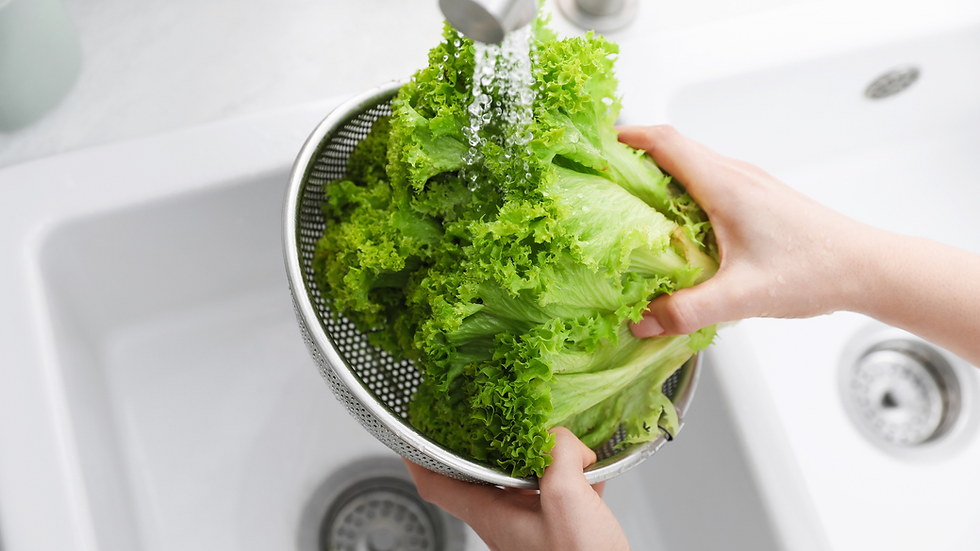
Should You Really Wash Your Food Before Eating?
A science-based breakdown of food contamination sources, potential health consequences, effective washing methods, and common food-cleaning myths that don’t hold up to evidence.

Can Meal Prepping Improve Healthy Eating Habits Long Term?
A fact-based look at the science behind meal prepping, optimal prep duration and food safety, potential downsides, and the extra benefits most people overlook.
.png)
1 / 3


About Gadgifyr
We uncover and review gadgets that genuinely make life better — from boosting focus and energy to improving everyday comfort and wellbeing.
No exaggerations, no empty promises. Just real reviews, grounded research, and practical tech that adds value — not noise.
When a gadget makes bold claims, we test the facts, check the science, and give you the clarity you need to decide with confidence.
Join the Gadgifyr Community
Stay ahead of the curve, together.
Get involved with a community that loves smart gadgets, real reviews, and tech that actually improves life.
Subscribe to the Newsletter
No spam. Just smart tech.
Get new reviews, science insights, and hand-picked gadget drops straight to your inbox.
Explore Gadgifyr's Blogs

Gadgifyr
April 18, 2026
-
7 min
Clean Mouth, Clear Science: What Actually Improves Oral Hygiene
A science-guided oral care routine is built on consistent plaque control, smart fluoride use, and lifestyle choices that reduce acid exposure - while avoiding overbrushing, unnecessary abrasion, and “whitening” shortcuts that can undermine enamel protection.
Category

Gadgifyr
May 18, 2026
-
6 min
Intermittent Fasting: What It Does, What It Doesn’t, and How to Use It Safely
A practical, evidence-grounded guide to what intermittent fasting is, how it affects metabolism and appetite, where the research is strongest, what is still uncertain, and how to implement it.
Category

Gadgifyr
May 28, 2026
-
7 min
Cook Faster With Less Mess: 5 Genius Kitchen Tools That Upgrade Workflow
Want cooking to feel smoother day-to-day? These five tools improve prep speed, reduce mess, and keep ingredients moving—without turning the kitchen into a gadget collection.
Category

Gadgifyr
May 3, 2026
-
7 min
Wearable Health Tracking Demystified: What Your Smartgear Gets Right - and What It Doesn’t
An accessible exploration of how consumer wearables sense the body, which measurements hold practical value, where accuracy weakens, and how upcoming technologies could expand their medical relevance.
Category


