Healthy Cooking Methods: What to Use—and What to Avoid
Different cooking methods protect or damage nutrients in different ways, and some high-heat methods can create unwanted compounds. This article explains which methods tend to be healthiest, which are most risky when used often, and how to match cooking style & Gadgets to specific foods—using proven research.
What the Science Says
There is no single “best” cooking method for every food, because health outcomes depend on what you cook and what heat does to it. In general, gentler methods (like steaming, microwaving with minimal water, and baking at moderate temperatures) often protect more of a vegetable’s beneficial compounds than boiling for long periods.
Research on vegetables shows that cooking can change total phenolics and antioxidant activity, but not always in a negative way: depending on the vegetable, antioxidant activity may increase or stay similar after cooking. However, studies comparing home methods often find that boiling and pressure-cooking can cause larger losses in some antioxidant measures, largely because nutrients can leach into the cooking water.
For vegetables, the “healthiest” trend is to use methods that limit water loss and overcooking. Microwaving (with little water), griddling, and baking often produce smaller antioxidant losses than boiling, while frying sits in the middle. Steaming tends to behave like a water-sparing method in practice (even though it isn’t directly tested in every study), because food is not submerged and fewer water-soluble compounds are washed away. The key is time: shorter cooking preserves more, while softening can also improve palatability and make some compounds easier to access.

For starchy foods like potatoes, high dry heat can create acrylamide, a compound linked to the Maillard reaction—especially when foods rich in asparagine and sugars are heated intensely (frying is a common example). For meats, very high-temperature cooking (especially well-done, charred, or heavily browned meat) can produce heterocyclic amines (HCAs) and polycyclic aromatic hydrocarbons (PAHs). Large studies linking cooking patterns to health outcomes have found that well-done red meat and higher estimated exposure to certain HCAs/PAHs are associated with higher colorectal adenoma risk.
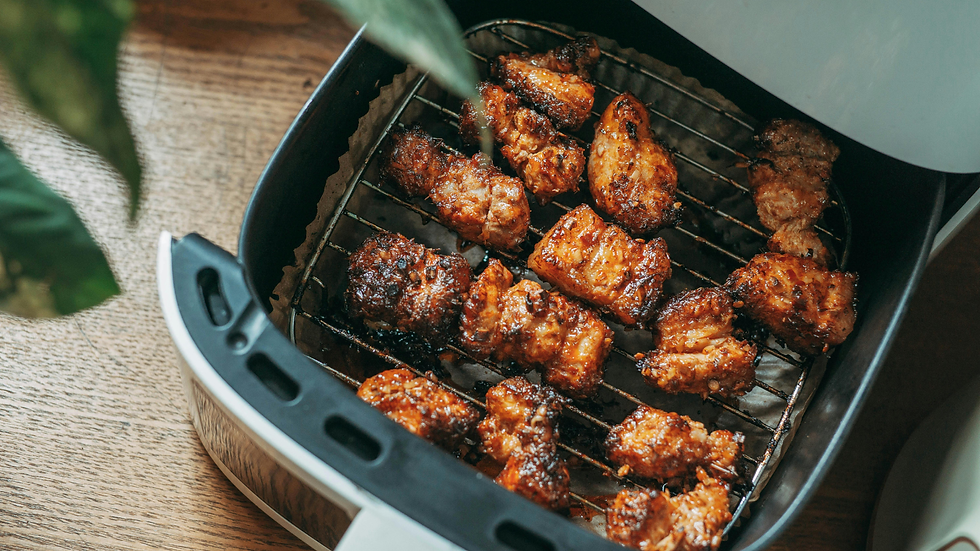
Modern kitchen gadgets can help—but only if they guide you toward better heat control. Air fryers can reduce the need for added oil compared with deep frying, but reviews note that air frying can create a pro-oxidative environment for lipids, with evidence of oxidation products and degradation of sensitive fats (especially in fish). So “modern” is not automatically “healthier”; the healthiest tool is the one that helps you cook with less charring, less oil overload, and better temperature control.
Related Books ▼
Gadgifyr could not find any relatable books about this topic that were not to advanced and/or technical.
-

Real - World Performance
⚙️ Steaming vegetables helps limit nutrient loss by avoiding long contact with boiling water.
⚙️ Microwaving with minimal water can preserve antioxidant measures better than boiling for many vegetables.
⚙️ Baking and roasting at moderate heat works well for vegetables when you avoid heavy browning and long cook times.
⚙️ Boiling is best when you use the cooking water, like soups, because leached nutrients stay in the meal.
⚙️ Poaching and gentle simmering are good for fish and eggs, limiting high-heat damage and drying.
⚙️ Air frying can cut added oil versus deep frying, which can improve calorie and fat control for some foods.
⚙️ Lowering doneness for meats (avoid charring/well-done) reduces formation of HCAs/PAHs linked to higher risk markers.
⚙️ Using timers and temperature control gadgets reduces accidental overcooking, a major driver of unwanted compounds.
Good to Know
🔍 Water is not always your friend for vegetables—boiling can increase losses because compounds move into the water.
🔍 Antioxidants don’t always drop with cooking; some vegetables show stable or even increased antioxidant activity after heating.
🔍 Acrylamide forms mainly with high heat in starchy foods, especially frying and intense browning.
🔍 Well-done or charred meat creates HCAs and PAHs, and higher exposure has been linked with higher colorectal adenoma risk.
🔍 Air frying isn’t “zero chemistry”—lipid oxidation products can form, especially with fatty foods like fish.
🔍 Shorter cook times usually help: overcooking is a bigger problem than the method itself.
🔍 Deep frying often adds more calories and fat, even if the food tastes crisp and satisfying.
🔍 Pressure cooking can increase losses for some antioxidant measures, likely due to heat intensity and water contact.

Evidence-Based Reliability Score
Strong evidence for cooking-method effects on antioxidants and for high-heat meat by-products; growing evidence for air-frying lipid oxidation.
87%
The Consumer Takeaway
The healthiest cooking style is less about one perfect method and more about matching heat to the food. For vegetables, research suggests that water-heavy methods like boiling can reduce antioxidant measures more often, while methods that use less water—like microwaving with minimal water, baking, and quick griddling—often preserve more.
For meats and starchy foods, the bigger health concern is high-temperature browning and charring, which can create acrylamide (in starchy foods) and HCAs/PAHs (in meats). Studies show that well-done meat and higher estimated HCA/PAH exposure are associated with higher colorectal adenoma risk, making “less char, less often” a reasonable rule.
Modern gadgets can help if they make healthier choices easier. Air fryers can reduce added oil compared to deep frying, but evidence also shows they can promote lipid oxidation in fatty foods, so technique still matters. Overall, the healthiest cooking routine is controlled heat, shorter cook times, and fewer heavily browned meals—while using tools that support consistency rather than pushing food toward extreme crisping.
Turkmen, N., Sari, F., & Velioglu, Y. S. (2005). The effect of cooking methods on total phenolics and antioxidant activity of selected green vegetables. Food Chemistry. https://doi.org/10.1016/j.foodchem.2004.12.038
Jiménez-Monreal, A. M., García-Diz, L., Martínez-Tomé, M., Mariscal, M., & Murcia, M. A. (2009). Influence of cooking methods on antioxidant activity of vegetables. Journal of Food Science, 74(3), H97–H103. https://doi.org/10.1111/j.1750-3841.2009.01091.x
Gökmen, V., & Palazoğlu, T. K. (2008). Acrylamide formation in foods during thermal processing with a focus on frying. Food and Bioprocess Technology, 1(1), 35–42. https://doi.org/10.1007/s11947-007-0005-2
De Oliveira, V. S., Viana, D. S. B., Keller, L. M., Melo, M. T. T., Melo, M. C. N., Mulandeza, O. F., Barbosa, M. I. M. J., Barbosa Junior, J. L., & Saldanha, T. (2024). Impact of air frying on food lipids: Oxidative evidence, current research, and insights into domestic mitigation by natural antioxidants. Trends in Food Science & Technology, 147, 104465. https://doi.org/10.1016/j.tifs.2024.104465
Sinha, R., Peters, U., Cross, A. J., Kulldorff, M., Weissfeld, J. L., Pinsky, P. F., Rothman, N., & Hayes, R. B. (2005). Meat, meat cooking methods and preservation, and risk for colorectal adenoma. Cancer Research, 65(17), 8034–8041. https://doi.org/10.1158/0008-5472.CAN-04-3429
DID YOU GET ANY OF THAT?
Read a summarization of this page's content in question-answer format ▽ (click to open and collapse the content)
Is steaming always the healthiest option?
Steaming is often a strong choice for vegetables because it limits nutrient losses into water and reduces overcooking risk. But microwaving with minimal water or quick baking can be similarly good, depending on the vegetable and cooking time.
Is air frying healthier than deep frying?
Air frying usually reduces the need for added oil, which can lower overall fat and calories compared with deep frying. However, research shows air frying can promote lipid oxidation—especially in fatty foods—so avoiding overbrowning and using sensible temperatures still matters.
What cooking methods are worst for meat?
Frequently cooking meat until well-done or charred is a concern because high temperatures can form HCAs and PAHs. Studies linking estimated exposure to these compounds with colorectal adenoma risk suggest that gentler cooking and avoiding charring is a safer habit.
How can boiling be “healthy” if it causes nutrient loss?
Boiling can be fine when the cooking water is consumed, such as in soups and stews, because the leached nutrients stay in the meal. It becomes less ideal when the water is drained away and cooking times are long.
Do modern gadgets automatically improve food quality?
Not automatically—gadgets help when they improve temperature control, reduce overcooking, and make lower-oil cooking easier. If a device encourages heavy browning or very high heat, it can also increase unwanted by-products.
Gadgets Connected to These Scientific Insights
The gadgets shown here each rely on the science discussed in this article — sometimes directly, sometimes through a clever variation of the same underlying technology.
For the best experience, we recommend reading the summary first. It gives you a quick, clear understanding of how the technology works and helps you decide whether these gadgets match what you’re looking for.

This review covers an Amazon product offered through affiliate links. Gadgifyr may earn a small commission if you buy — at no extra cost to you.

Seller:
Amazon
CHEF iQ MiniOven Smart Toaster Oven Air Fryer Combo
An 11-in-1 countertop convection oven that combines fast cooking, app-guided presets, and a family-sized 25-quart cavity to cover most “main oven” tasks without heating up the whole kitchen.
Explore other Gadget Related Articles:

Do Automatic Cookers Improve Food Quality - or Just Convenience?
Automatic cookers can improve consistency and nutrient retention mainly by controlling time, temperature, and moisture, but evidence that “robot chefs” cook better than humans is still limited.
Should You Really Wash Your Food Before Eating?
A science-based breakdown of food contamination sources, potential health consequences, effective washing methods, and common food-cleaning myths that don’t hold up to evidence.

Can Meal Prepping Improve Healthy Eating Habits Long Term?
A fact-based look at the science behind meal prepping, optimal prep duration and food safety, potential downsides, and the extra benefits most people overlook.
.png)
1 / 3


About Gadgifyr
We uncover and review gadgets that genuinely make life better — from boosting focus and energy to improving everyday comfort and wellbeing.
No exaggerations, no empty promises. Just real reviews, grounded research, and practical tech that adds value — not noise.
When a gadget makes bold claims, we test the facts, check the science, and give you the clarity you need to decide with confidence.
Join the Gadgifyr Community
Stay ahead of the curve, together.
Get involved with a community that loves smart gadgets, real reviews, and tech that actually improves life.
Subscribe to the Newsletter
No spam. Just smart tech.
Get new reviews, science insights, and hand-picked gadget drops straight to your inbox.
Explore Gadgifyr's Blogs


Gadgifyr
February 17, 2026
-
9 min
What Actually Builds Mental Well-Being
What truly improves mental well-being in real life - and how to combine movement, attention training, relationships, and daily structure into a system that actually holds up under stress.
Category

Gadgifyr
March 3, 2026
-
8 min
The Recovery Routine That Protects Your Body After Hard Effort
What actually helps after intense effort - and what recovery claims should be treated with caution?
Category

Gadgifyr
January 28, 2026
-
6 min
Heat & Cold Therapy, Demystified: Evidence, Protocols, and Real-World Routines
Curious about cold and heat therapy? Here’s what the science really says—plus simple, safe routines you can start at home.
Category


