
Plastic Cutting Boards and Microplastic Exposure
This article examines scientific evidence showing how plastic cutting boards release microplastics during routine kitchen use, what factors influence this release, and what current research suggests about potential health implications.
What the Science Says
Plastic cutting boards are widely used in both household and commercial kitchens due to their low cost, durability, and perceived hygiene. However, recent environmental health research has identified these everyday tools as a previously underestimated source of microplastics entering human food. Repeated knife contact causes gradual abrasion of plastic surfaces, producing microscopic fragments that can transfer directly to food during preparation. This issue is particularly relevant as food preparation is a universal daily activity, making even small releases potentially significant over time.
Experimental studies have demonstrated that both polyethylene (PE) and polypropylene (PP) cutting boards shed microplastics during chopping, slicing, and dicing. Controlled laboratory simulations show that microplastic release increases with repeated cutting cycles, meaning older boards tend to shed more material than newer ones.
The released particles are predominantly small—often below 100 micrometers—and mostly spherical or irregular in shape. PP boards generally release higher numbers of particles, while PE boards tend to release greater total mass, highlighting how material composition influences exposure characteristics. Chopping firm foods such as carrots further increases abrasion compared to cutting without food contact.
Beyond release quantities, several studies have attempted to estimate potential human exposure. Based on experimentally measured wear rates and typical kitchen usage assumptions, researchers estimate that annual per-person exposure from plastic cutting boards may range from several grams to tens of grams of microplastics, corresponding to tens of millions of particles per year. While these estimates rely on modeled assumptions, they provide a scale that places cutting boards alongside other recognized dietary microplastic sources.
Health-related findings remain nuanced. Short-term cell-based toxicity tests using microplastics released from PE cutting boards showed no significant reduction in cell viability over 72 hours, suggesting limited acute cytotoxicity under those conditions. However, longer-term animal studies offer a more complex picture. In mouse models, diets prepared on PP cutting boards led to markers of intestinal inflammation, increased gut permeability, and elevated inflammatory biomarkers, whereas PE-derived microplastics primarily altered gut microbiota composition and metabolic profiles without overt inflammation.
Importantly, these effects occurred even when plastic particles themselves were not detected in tissues, indicating that functional biological responses may arise without direct particle accumulation.
Taken together, the evidence identifies plastic cutting boards as a consistent and non-trivial contributor to dietary microplastic exposure. While definitive conclusions about long-term human health impacts cannot yet be drawn, the convergence of release data and biological responses underscores the need for further investigation and more informed consumer awareness.
Related Books ▼
Gadgifyr could not find any relatable books about this topic that were not to advanced and/or technical.
-

Real - World Performance
⚙️ Material choice matters: Polypropylene boards tend to release more particles, while polyethylene boards release greater mass.
⚙️ Board age increases exposure: Older, heavily used boards shed more microplastics than newer ones.
⚙️ Food texture influences wear: Hard vegetables and repeated chopping accelerate plastic abrasion.
⚙️ Alternatives reduce risk: Wooden boards showed negligible microplastic release in comparative studies.
Good to Know
🔍 Microplastics are defined as particles smaller than 5 mm, many of which are invisible to the naked eye.
🔍 Release occurs during normal use, not just extreme or industrial cutting conditions.
🔍 Washing food can reduce but not eliminate contamination once particles adhere to surfaces.
🔍 Heat can alter microplastic shape, sometimes causing particles to melt and fuse during cooking.
🔍 Low levels of additives and metals were detected, but not at concentrations linked to acute toxicity.
🔍 Animal models do not directly equate to human outcomes, but they provide early biological signals.
🔍 No plastic cutting board tested was completely “inert” under repeated use conditions.

Evidence-Based Reliability Score
The conclusions are supported by controlled experiments, quantitative measurements, and complementary animal studies, though human exposure pathways and long-term outcomes remain under investigation.
77%
The Consumer Takeaway
Scientific evidence increasingly shows that plastic cutting boards are not passive kitchen tools, but active contributors to microplastic exposure during everyday food preparation. Through repeated knife contact, polyethylene and polypropylene boards gradually shed microscopic fragments that can mix directly with food. Laboratory simulations and real-food studies consistently demonstrate that this release grows with board age, cutting frequency, and food hardness.
From a health perspective, the findings are measured rather than alarmist. Acute toxicity from released microplastics appears limited in short-term tests, yet longer animal studies reveal material-specific biological responses, ranging from intestinal inflammation to changes in gut microbiota and metabolism. These effects occurred even without detectable particle accumulation in tissues, suggesting that exposure pathways may be more subtle than simple particle uptake.
Overall, the research does not argue for panic, but for informed caution. Plastic cutting boards represent a controllable exposure source—one that can be reduced through material choice, regular replacement, or alternative surfaces. As microplastic science evolves, these studies highlight how mundane design decisions in everyday gadgets can carry broader environmental and biological implications, reinforcing the value of evidence-based choices in both product design and daily life.
Yadav, H., Khan, M. R. H., Quadir, M., Rusch, K. A., Mondal, P. P., Orr, M., Xu, E. G., & Iskander, S. M. (2023). Cutting boards: An overlooked source of microplastics in human food? Environmental Science & Technology, 57(22).
Liu, Y., Cao, Y., Li, H., Liu, H., Bi, L., Chen, Q., & Peng, R. (2024). A systematic review of microplastics emissions in kitchens: Understanding the links with diseases in daily life. Environment International, 108740.
Gan, H.-J., Chen, S., Yao, K., Lin, X.-Y., Juhasz, A. L., Zhou, D., & Li, H.-B. (2025). Simulated microplastic release from cutting boards and evaluation of intestinal inflammation and gut microbiota in mice. Environmental Health Perspectives, 133(3–4), 047004.
Habib, R. Z., Al Kindi, R., Al Salem, F., Kittaneh, W. F., Poulose, V., Iftikhar, S. H., Mourad, A.-H. I., & Thiemann, T. (2022). Microplastic contamination of chicken meat and fish through plastic cutting boards. International Journal of Environmental Research and Public Health, 19(20), 13442.
DID YOU GET ANY OF THAT?
Read a summarization of this page's content in question-answer format ▽ (click to open and collapse the content)
Why do plastic cutting boards release microplastics at all?
Repeated knife contact causes microscopic abrasion of the plastic surface. Over time, this mechanical wear generates particles small enough to transfer directly to food.
Are all plastic cutting boards equally problematic?
No. Studies show that polypropylene boards release more particles, while polyethylene boards release greater mass, leading to different exposure profiles.
Does washing food remove these particles?
Washing can reduce microplastic contamination, but it does not fully eliminate particles that have already adhered to food surfaces.
Do these microplastics stay in the body?
Current animal studies suggest that biological effects can occur even without detectable accumulation, indicating that interaction with the gut environment may be sufficient.
Is switching to wooden boards safer?
Based on current evidence, wooden boards released negligible microplastics under comparable cutting conditions.
Gadgets Connected to These Scientific Insights
The gadgets shown here each rely on the science discussed in this article — sometimes directly, sometimes through a clever variation of the same underlying technology.
For the best experience, we recommend reading the summary first. It gives you a quick, clear understanding of how the technology works and helps you decide whether these gadgets match what you’re looking for.

This review covers an Amazon product offered through affiliate links. Gadgifyr may earn a small commission if you buy — at no extra cost to you.

Seller:
Amazon
FoodSaver Compact Vacuum Sealer Machine
Space-saving vacuum sealer for fresher food and freezer efficiency

Explore other Gadget Related Articles:

Do Automatic Cookers Improve Food Quality - or Just Convenience?
Automatic cookers can improve consistency and nutrient retention mainly by controlling time, temperature, and moisture, but evidence that “robot chefs” cook better than humans is still limited.
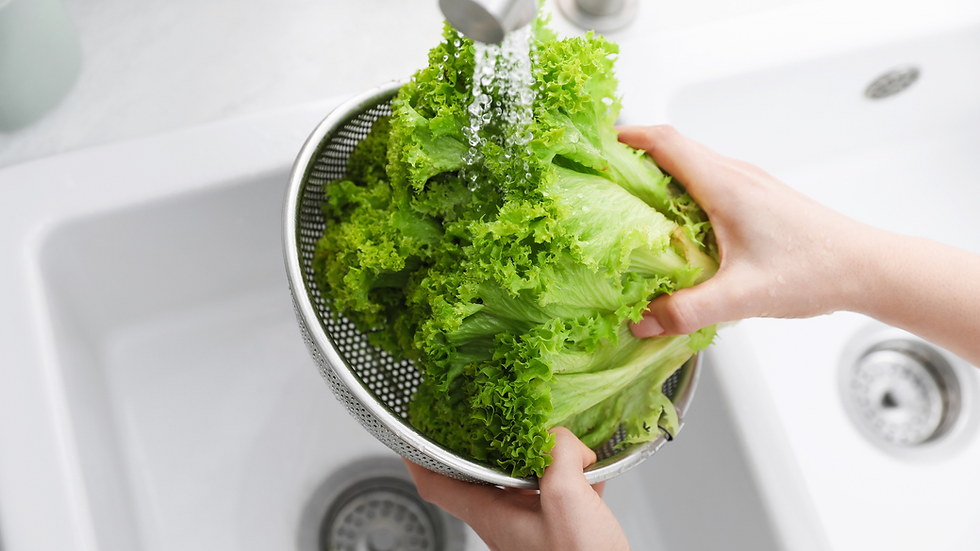
Should You Really Wash Your Food Before Eating?
A science-based breakdown of food contamination sources, potential health consequences, effective washing methods, and common food-cleaning myths that don’t hold up to evidence.

Can Meal Prepping Improve Healthy Eating Habits Long Term?
A fact-based look at the science behind meal prepping, optimal prep duration and food safety, potential downsides, and the extra benefits most people overlook.
.png)
1 / 3


About Gadgifyr
We uncover and review gadgets that genuinely make life better — from boosting focus and energy to improving everyday comfort and wellbeing.
No exaggerations, no empty promises. Just real reviews, grounded research, and practical tech that adds value — not noise.
When a gadget makes bold claims, we test the facts, check the science, and give you the clarity you need to decide with confidence.
Join the Gadgifyr Community
Stay ahead of the curve, together.
Get involved with a community that loves smart gadgets, real reviews, and tech that actually improves life.
Subscribe to the Newsletter
No spam. Just smart tech.
Get new reviews, science insights, and hand-picked gadget drops straight to your inbox.
Explore Gadgifyr's Blogs


Gadgifyr
January 11, 2026
-
5 min
Focus Mode On: 6 Work-From-Home Upgrades That Actually Help
Working from home? Discover six gadgets that keep you focused, organized, and in control—without overcomplicating your workspace.
Category

Gadgifyr
January 7, 2026
-
6 min
The Sleep Fix: Science-Backed Ways to Sleep Deeper and Wake Better
Struggling with restless nights? Discover what science really says about how to fall asleep faster, sleep deeper, and wake restored.
Category

Gadgifyr
January 10, 2026
-
6 min
Science-Backed Skin Tech: What Really Works and What Still Needs Proof
Can light, electricity, and heat truly transform your skin? A closer look at the science behind today’s most talked-about technologies.
Category


