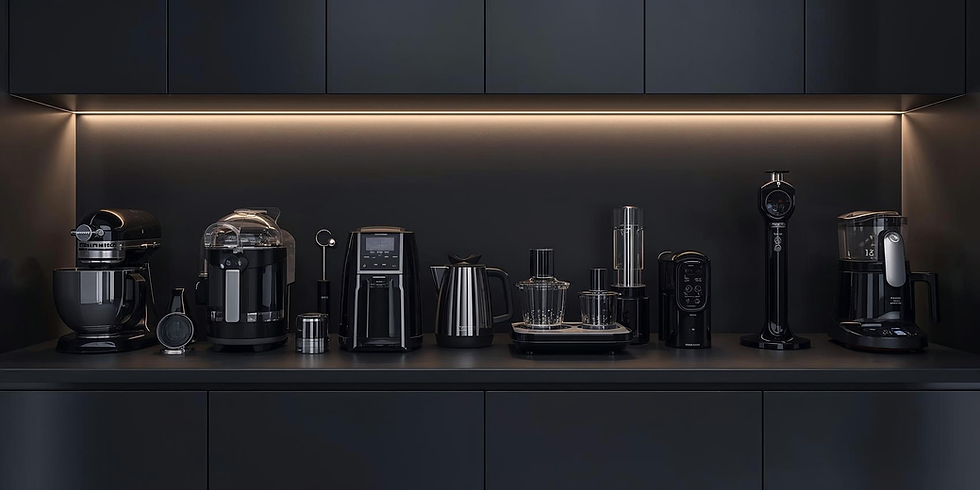
Do Automatic Cookers Improve Food Quality - or Just Convenience?
Modern cookers promise “perfect results” by automating heat, timing, and sometimes stirring. This article explains what food-quality science says about cooking control, where automated cookers genuinely help, and what is still missing in research comparing robots to real people.
What the Science Says
Food quality is not only about taste—it includes nutrient retention, texture, safety, and consistency. The biggest drivers are often surprisingly simple: how hot food gets, how long it stays hot, and how much water or air exposure it has during cooking. That is why inexperienced cooking can go wrong in predictable ways: boiling vegetables too long, drying out proteins, or over-browning fats. Automated cookers and “smart” kitchen robots try to reduce these errors by holding steadier conditions than a distracted human can.
One clear example is vitamin retention in vegetables. A study comparing blanching, boiling, steaming, and microwaving found that vitamin C retention varied widely (from 0% up to over 90%, depending on vegetable and method). In general, microwaving showed higher vitamin C retention, while boiling often caused the largest losses, consistent with the idea that water contact and long heat exposure pull water-soluble vitamins out and degrade them.
The same study showed that some fat-soluble vitamins (like vitamin E or vitamin K) can sometimes appear higher after cooking—not because cooking “creates vitamins,” but because heating can break down plant structures and make vitamins easier to measure (and potentially easier to access). This is exactly where modern cookers can help: they reduce “guesswork” by standardizing time and limiting unnecessary water use.

When people say “cooking robots,” it helps to separate two categories. Many popular home devices are automatic cookers (multicookers, rice cookers, steamers, sous-vide circulators, air fryers with sensors). These devices already improve outcomes by controlling temperature, pressure, moisture, and timing. True “robot chefs” (robotic arms that handle ingredients, flip food, or assemble dishes) are a newer research and restaurant trend.
A 2024 review describes growing progress in sensors (vision, force, even taste sensing) and machine learning for robotic cooking, but it also stresses a major limitation: there is no widely accepted benchmark for judging whether a robot cooks “better,” especially for taste, which is difficult even for trained humans to score consistently.
Finally, quality is not only physical—it is psychological. A 2025 set of experiments found that people sometimes rate robot-prepared food as less tasty and are willing to pay less, partly because automation reduces the “human care” feeling and can increase a sense of disgust. That means a robot can produce consistent food, yet still face acceptance barriers unless benefits (hygiene, precision, reliability) are communicated clearly.
Related Books ▼
Gadgifyr could not find any relatable books about this topic that were not to advanced and/or technical.
-

Real - World Performance
⚙️ Precise time–temperature control helps avoid overcooking, a key reason vitamin C and texture can drop in vegetables.
⚙️ Low-water cooking (steaming, microwaving, pressure cooking with minimal liquid) can protect water-soluble nutrients compared with long boiling.
⚙️ Consistency improves because the device repeats the same conditions each time, reducing “human variability.”
⚙️ Built-in programs reduce beginner mistakes (too high heat, too long cooking, forgetting the pot), improving “just right” results.
⚙️ Sensors and feedback (temperature probes, timed cycles) can reduce undercooking risk in some workflows, supporting food safety.
⚙️ Hands-off cooking lowers mental load, which indirectly improves meal quality by making healthy cooking easier to do regularly.
⚙️ Robotic chef systems could personalize cooking in theory, but this is still developing and not yet standardized for home use.
Good to Know
🔍 “Better” cooking depends on the goal: nutrient retention, taste, texture, speed, or convenience can point to different methods.
🔍 Boiling is a common nutrient-loss trap for water-soluble vitamins, especially with long cook times and lots of water.
🔍 Automation mainly improves consistency, not magically the ingredient quality—bad ingredients stay bad.
🔍 Some nutrients look higher after cooking because heating breaks structures and changes extractability, not because more nutrients were added.
🔍 Robotic cooking is hard to compare fairly because taste scoring is subjective and there is no universal benchmark yet.
🔍 Consumer perception matters: some people rate robot-made food lower even if the physical product is consistent.
🔍 Automatic cookers help beginners most by preventing big errors; skilled cooks can often match or exceed results manually.
🔍 “Set-and-forget” can still fail if portions, cut size, and starting temperature are very different from what a program expects.

Evidence-Based Reliability Score
Strong evidence that cooking method/time matters for nutrients and that modern cooking gadgets do this correct; weaker evidence that robots outperform humans in real-world taste and quality.
74%
The Consumer Takeaway
Automatic food cookers can improve food quality in a very practical way: by controlling time, temperature, and moisture, they reduce the most common causes of overcooking and inconsistency. Evidence from vegetable cooking shows nutrient retention—especially for vitamin C—can swing dramatically depending on method, and automation can help people choose and repeat gentler approaches such as microwaving or steaming rather than long boiling. For many households, that reliability is a real health benefit because it makes it easier to cook vegetables and home meals consistently.
Where the evidence is thinner is the claim that robotic chefs cook better than humans. A recent robotics review emphasizes that sensing and autonomy are improving, but benchmarking “good cooking,” especially taste, remains difficult. Overall, modern cookers already deliver meaningful value through repeatability and reduced mistakes, while full robotic cooking still needs stronger, standardized testing before “better than humans” can be treated as a proven advantage.
Lee, S., Choi, Y., Jeong, H. S., Lee, J., & Sung, J. (2017). Effect of different cooking methods on the content of vitamins and true retention in selected vegetables. Food Science and Biotechnology, 27(2), 333–342. https://doi.org/10.1007/s10068-017-0281-1
Pancer, E., Noseworthy, T. J., McShane, L., Taylor, N., & Philp, M. (2025). Robots in the kitchen: The automation of food preparation in restaurants and the compounding effects of perceived love and disgust on consumer evaluations. Appetite, 204, 107723. https://doi.org/10.1016/j.appet.2024.107723
Sochacki, G., Zhang, X., Abdulali, A., & Iida, F. (2024). Towards practical robotic chef: Review of relevant work and future challenges. Journal of Field Robotics. https://doi.org/10.1002/rob.22321
DID YOU GET ANY OF THAT?
Read a summarization of this page's content in question-answer format ▽ (click to open and collapse the content)
How exactly can an automatic cooker “improve food quality”?
It improves quality mainly by holding temperature and time steady, which reduces overcooking and inconsistent texture. That control can also reduce nutrient loss when it prevents long boiling or excessive heat exposure.
Does precise cooking time really matter for nutrition?
Yes—vitamin C is especially sensitive to heat and water, and retention can vary from near zero to very high depending on method and duration. A cooker that prevents “accidental extra minutes” can make a real difference over many meals.
Are robot chefs proven to cook better than people?
Not yet in a clean, universal way, because “better” is hard to measure and taste benchmarks are not standardized. The robotics literature highlights progress in sensing and control, but also emphasizes that objective evaluation of taste and palatability remains a major challenge.
Why might people rate robot-made food as worse even if it’s consistent?
Some experiments suggest automation can reduce the feeling that food contains “human care,” and it may trigger mild disgust reactions in some consumers. Communicating concrete benefits—like consistency, hygiene, or reduced errors—can reduce this negative reaction.
What’s the most realistic benefit for most households right now?
For most people, the biggest gain is repeatable results with less effort: fewer burnt meals, better vegetable texture, and easier healthy routines. Skilled cooks can still outperform machines on creativity and adaptation, but automation can raise the baseline for busy or inexperienced users.
Gadgets Connected to These Scientific Insights
The gadgets shown here each rely on the science discussed in this article — sometimes directly, sometimes through a clever variation of the same underlying technology.
For the best experience, we recommend reading the summary first. It gives you a quick, clear understanding of how the technology works and helps you decide whether these gadgets match what you’re looking for.

This review covers an Amazon product offered through affiliate links. Gadgifyr may earn a small commission if you buy — at no extra cost to you.

Seller:
Amazon
CHEF iQ MiniOven Smart Toaster Oven Air Fryer Combo
An 11-in-1 countertop convection oven that combines fast cooking, app-guided presets, and a family-sized 25-quart cavity to cover most “main oven” tasks without heating up the whole kitchen.
Explore other Gadget Related Articles:

Do Automatic Cookers Improve Food Quality - or Just Convenience?
Automatic cookers can improve consistency and nutrient retention mainly by controlling time, temperature, and moisture, but evidence that “robot chefs” cook better than humans is still limited.
Should You Really Wash Your Food Before Eating?
A science-based breakdown of food contamination sources, potential health consequences, effective washing methods, and common food-cleaning myths that don’t hold up to evidence.

Can Meal Prepping Improve Healthy Eating Habits Long Term?
A fact-based look at the science behind meal prepping, optimal prep duration and food safety, potential downsides, and the extra benefits most people overlook.
.png)
1 / 3


About Gadgifyr
We uncover and review gadgets that genuinely make life better — from boosting focus and energy to improving everyday comfort and wellbeing.
No exaggerations, no empty promises. Just real reviews, grounded research, and practical tech that adds value — not noise.
When a gadget makes bold claims, we test the facts, check the science, and give you the clarity you need to decide with confidence.
Join the Gadgifyr Community
Stay ahead of the curve, together.
Get involved with a community that loves smart gadgets, real reviews, and tech that actually improves life.
Subscribe to the Newsletter
No spam. Just smart tech.
Get new reviews, science insights, and hand-picked gadget drops straight to your inbox.
Explore Gadgifyr's Blogs


Gadgifyr
December 26, 2025
-
4 min
Wake Up Right: 4 Gadgets That Make Mornings Easier
From sunrise alarms to mug warmers, discover four simple gadgets that turn hectic mornings into smooth starts.
Category

Gadgifyr
December 19, 2025
-
5 min
Life with Pets, Made Easier: 4 Gadgets That Truly Make a Difference
Tired of fur, mud, and mess? Discover four smart gadgets that actually make life with pets easier — no gimmicks, just honest performance.
Category

Gadgifyr
December 30, 2025
-
3 min
How to Use Gadgifyr’s Gadget Guide: Your Shortcut to Smarter Discovery
Looking for new gadgets that truly deliver? The Gadgifyr Gadget Guide is your map to smarter tech — find, learn, and compare with ease.
Category


